Why Are UK Energy Bills So High? The Real Reasons

Written and reviewed by Sepehr. See our editorial policy.
Why are UK energy bills so high? The average household is paying a typical annual bill of £1,641 under the Ofgem Q2 2026 price cap — and from 1 July 2026, that rises to £1,862 following a 13% increase driven by higher wholesale gas prices. Prices have fallen from the crisis peak of 2022–23, but they remain well above pre-2021 norms. The reasons are structural, not accidental, and understanding them is the first step to insulating yourself from future shocks.
The UK's deep dependence on gas
Gas sits at the heart of UK energy costs. Even though wind overtook gas as the UK's single largest electricity source in 2024 — accounting for roughly 30% of generation against gas's 26.3% — gas still sets the marginal price of electricity in Great Britain approximately 85% of the time, according to NESO's 2024 review. That's because gas-fired power stations are typically the last plant called on to meet demand; under the way wholesale electricity markets are structured, the most expensive unit dispatched sets the price for all generation, including cheap wind and solar. When gas prices rise, electricity prices rise too.
Gas also heats around 85% of UK homes directly. So households face a double exposure: gas for central heating, and gas-indexed electricity for everything else.
The 2021–22 crisis left a lasting mark
Post-pandemic demand recovery collided with supply disruption. UK and European wholesale gas prices surged by roughly ten times between 2020 and their peak in mid-2022, according to IEA analysis of European gas market conditions. More than 30 UK energy suppliers collapsed under the weight of buying energy at spot prices above their fixed-rate retail contracts, triggering a wave of forced customer migrations and ultimately requiring Ofgem to introduce the modern quarterly price cap structure that now governs all standard variable tariffs.
The energy price cap caps the unit rate and standing charge suppliers may charge on default tariffs — it does not cap your total bill. Use more energy and you still pay more; the cap simply sets the ceiling per kilowatt-hour. To understand the deeper causes behind the numbers the cap tracks, read our full guide on why UK energy bills are so high.
Limited gas storage makes Britain vulnerable
The UK has remarkably little gas storage relative to its consumption. Following the closure of the Rough gas field in 2017 — once the UK's largest storage site — Britain's working gas storage capacity fell to the equivalent of roughly 2–3% of annual demand. France, by comparison, stores around 20–24% of annual demand. Germany holds even more. When global supply tightens or a cold spell draws stocks down quickly, the UK has little buffer and must buy at spot prices, amplifying price spikes for consumers and businesses alike.
Centrica partially reopened the Rough facility in late 2022, but total UK storage capacity remains a fraction of the European average and a structural weakness that regulators and government are still debating how to address.
Network costs and standing charges
Around a quarter of a typical electricity bill pays for the wires, cables, and substations that deliver power to your home. These network costs — set by Ofgem via its RIIO price controls — cover maintenance and upgrades to the transmission and distribution infrastructure. The UK's grid was largely built in the 1950s and 1960s and needs substantial reinforcement to handle the shift to electric heating and transport. That investment is partly funded through the standing charge: in Q2 2026, the electricity standing charge averages 57.2p per day (inclusive of VAT), meaning a household paying by Direct Debit spends around £209 per year just for the privilege of being connected, before using a single kilowatt-hour.
Environmental and social levies
Policy costs on energy bills fund renewable energy investment and support vulnerable households. Levies such as the Renewables Obligation (RO), the Contracts for Difference (CfD) scheme, the Warm Homes Discount, and previously the Energy Company Obligation (ECO) have collectively added tens of pounds per year to typical bills. Ofgem estimates these policy costs make up a meaningful share of non-wholesale costs, which together account for around 40–45% of a typical bill at the current cap level. From April 2026, the government moved some green levies off bills and into general taxation, saving households an estimated £150 per year — but the structural cost of grid decarbonisation does not disappear, it is simply collected differently.
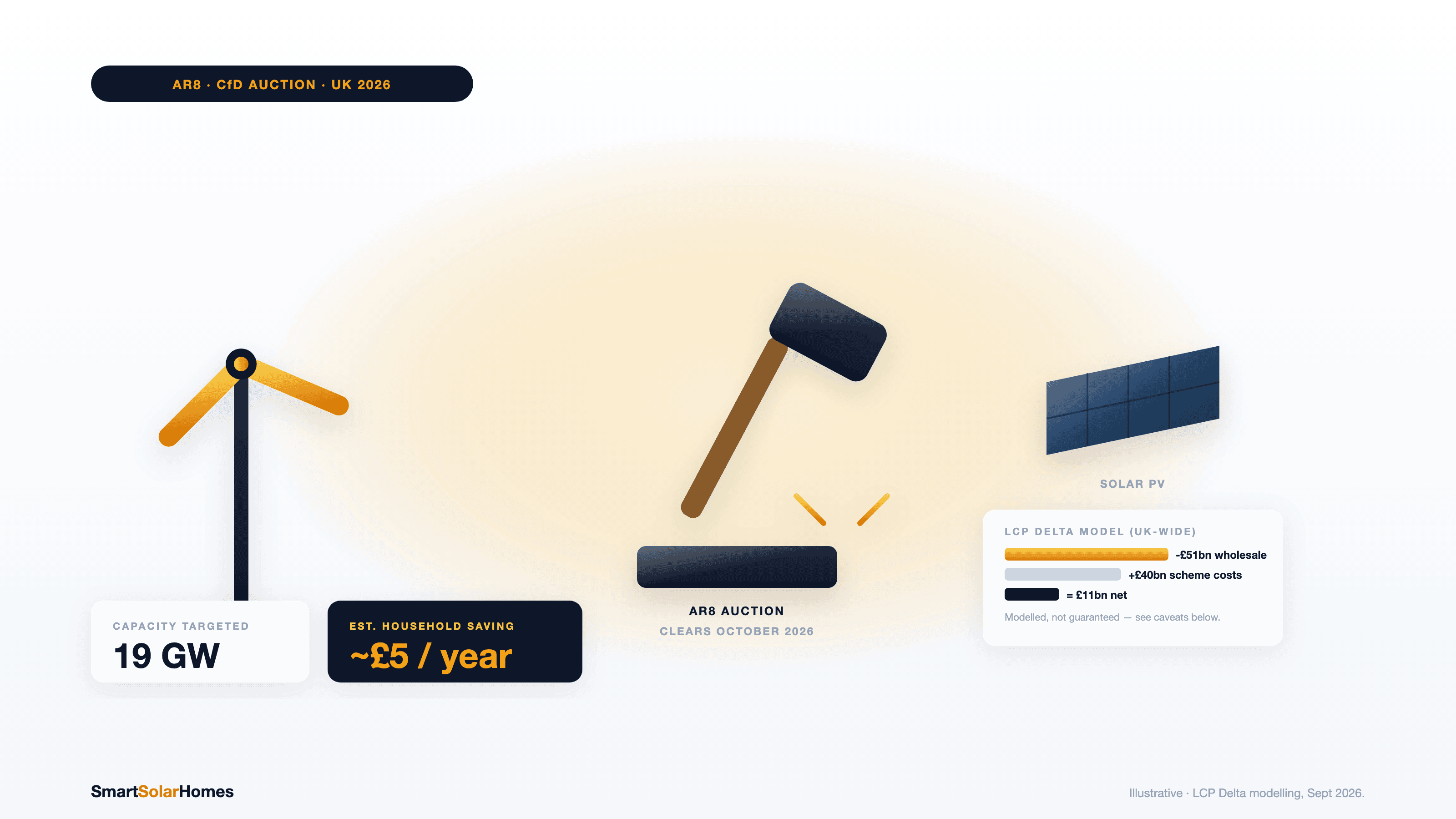
The CfD scheme is also the mechanism behind the government's latest renewables auction: see our explainer on what AR8, the eighth Contracts for Difference round, could mean for your bill.
Cold climate and poorly insulated homes
UK homes are among the least insulated in Europe. The Energy Saving Trust and the Department for Energy Security and Net Zero (DESNZ) have both noted that a large proportion of UK housing stock predates modern insulation standards, with significant heat loss through walls, roofs, and windows. Poor insulation means more energy is consumed to maintain comfortable indoor temperatures — and with gas central heating dominant, that translates directly to higher bills. The government's Warm Homes Plan targets this with a long-term upgrade programme, but progress has been slow relative to the scale of the problem.
Import dependency and geopolitical risk
The UK imports around half its gas supply, primarily via subsea pipelines from Norway and as liquefied natural gas (LNG) at terminals including South Hook in Wales and Dragon LNG. That import dependency exposes UK prices to geopolitical events thousands of miles away — from conflict in the Middle East affecting LNG shipping routes to Norwegian maintenance schedules affecting pipeline flows. Ofgem's announcement of the Q3 2026 13% cap rise explicitly cited higher wholesale gas prices caused by ongoing conflict in the Middle East as the primary driver.
What can homeowners do?
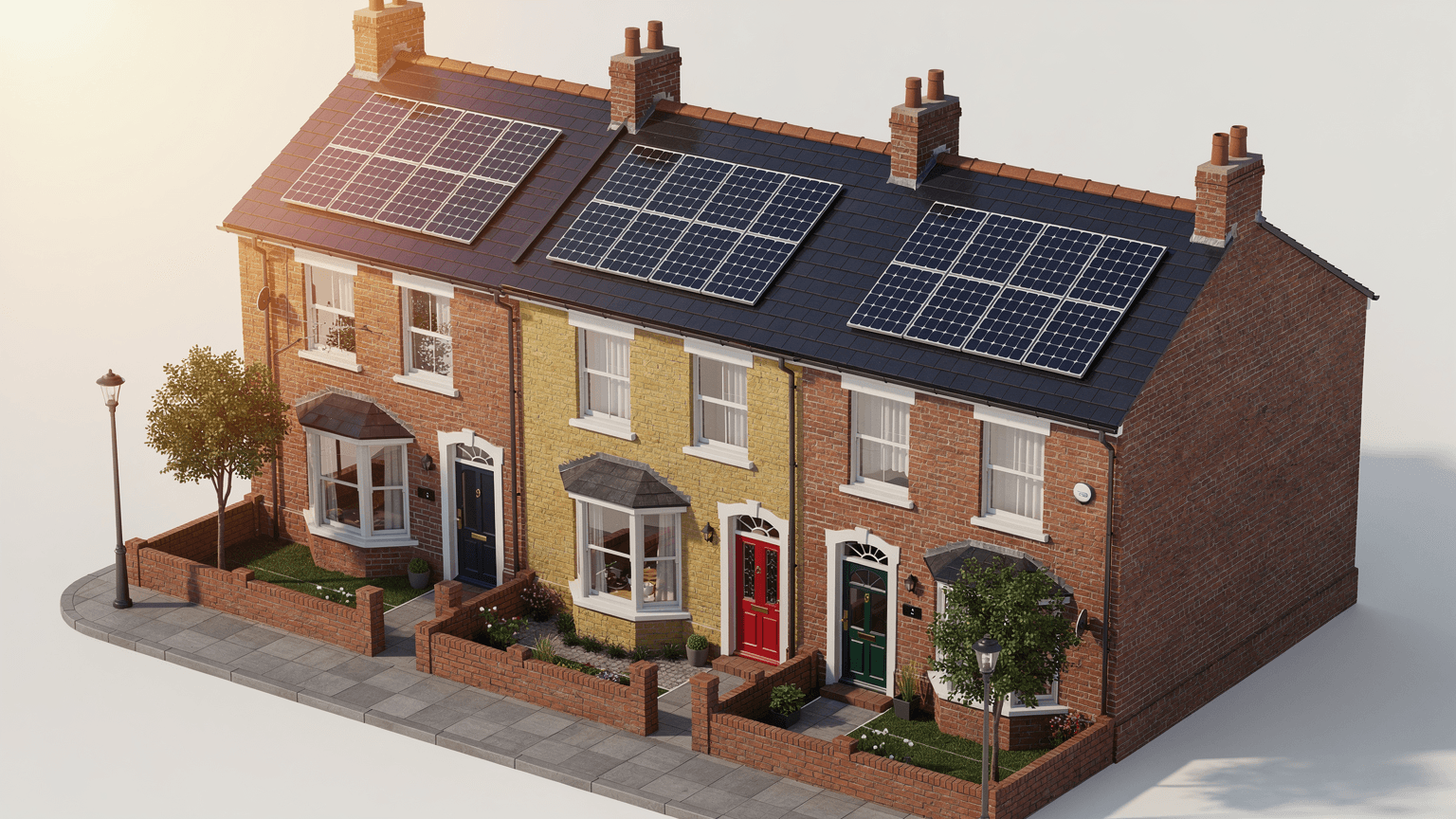
Understanding the causes is useful, but most households need practical responses. Solar panels are one of the most effective: with electricity at 24.67p per kWh under the Q2 2026 cap (rising to around 26p from July), self-generated electricity at a levelised cost of 5–7p per kWh represents a saving of roughly 18–20p on every unit you consume rather than import. With UK energy bills among the highest in Europe, solar payback periods are shortening — typically 7–10 years on a well-sized system. Adding a home battery lets you store surplus daytime generation for evening use, pushing self-consumption rates towards 80–90% and further reducing reliance on the grid.
Longer-term, improving your home's insulation reduces the total energy you need regardless of the source, and the government's Warm Homes Plan offers grant funding for cavity wall, loft, and external wall insulation. Heat pumps, which typically deliver 3–4 units of heat per unit of electricity consumed, can also cut the cost per unit of warmth substantially compared with a gas boiler once electricity prices normalise relative to gas.
For a detailed look at whether solar makes financial sense for your home right now, see our guide on are solar panels worth it in the UK? and explore how bills could look with a solar system on your roof in our how to reduce electricity bills in the UK guide.
A new but temporary lever has just been added to that mix: VAT on electricity bills is being cut from 5% to 0% between October 2026 and March 2027. It won't offset gas-driven price rises entirely, but it is one of the few near-term reductions on offer.
Network charges are another piece of the puzzle, and a September 2026 National Audit Office report found the £70bn grid upgrade programme behind those charges is running behind schedule — see our explainer on what UK grid upgrade delays mean for your bills for what that means and why it strengthens the case for generating more of your own power.
FAQs
Why are UK energy bills so high right now?
How much is the average UK energy bill in 2026?
Does the energy price cap limit my total bill?
Why does the UK pay so much just to be connected to the grid?
Can solar panels reduce my energy bills with prices this high?
Sources — verified 7 June 2026
- Ofgem — Changes to energy price cap Q2 2026 (1 Apr–30 Jun) — www.ofgem.gov.uk
- Ofgem — Energy price cap will rise by 13% from July 2026 (27 May 2026) — www.ofgem.gov.uk
- NESO — Britain’s Electricity Explained: 2024 Review — www.neso.energy
- IEA — Natural Gas market overview and European gas market analysis — www.iea.org
- House of Commons Library — Energy standing charges (CBP-10339) — commonslibrary.parliament.uk
- House of Commons Library — Gas and electricity prices during the energy crisis and beyond (CBP-9714) — commonslibrary.parliament.uk
- Energy Saving Trust — Insulation advice for UK homes — energysavingtrust.org.uk
- GOV.UK — Warm Homes Plan — www.gov.uk

About the author
Sepehr
Solar specialist & co-founder, Smart Solar Homes
Solar specialist and co-founder of Smart Solar Homes, which works with MCS-certified UK installer partners. I write all the guides and reviews here; the aim is straight-talking education the industry rarely provides.
Citing this page? Please use a dofollow link back to the original article — it helps us keep the data on this page accurate and up to date.
Browse Solar Panels on Smart Solar Homes


Want to compare these side by side? Use the compare tool →
Or browse all Solar Panels on Smart Solar Homes.
Related reading
More on solar panels from the editorial team.
Find installers near you
MCS-certified solar installers covering these areas.