How to Reduce Your Electricity Bills: A UK Guide

Written and reviewed by Sepehr. See our editorial policy.
Reducing electricity bills in the UK starts with understanding where your money actually goes. The typical UK household uses around 2,700 kWh of electricity per year, according to Ofgem’s Typical Domestic Consumption Values. At the Q2 2026 price cap rate of 24.67p per kWh (plus a 57.21p daily standing charge), that works out to roughly £725 per year just in unit costs before standing charges are added. The good news is that many households can cut this significantly — some by well over half — through a combination of quick low-cost changes and strategic investments. This guide covers both, starting with the measures that pay back fastest and building towards the technologies that make the biggest long-term difference to your electricity bills.
Quick wins: low-cost changes with immediate savings
Switch all bulbs to LED
Typical saving: around £40 per year. Lighting accounts for approximately 11% of the average UK household’s electricity consumption, according to the Energy Saving Trust. LED bulbs use around 80% less electricity than old halogen equivalents, and a full home switch can save roughly £40 per year — with individual bulbs paying back in months. If you still have halogens in kitchen downlighters or bathroom strips, those are the ones worth prioritising first.
Reduce standby and phantom loads
Typical saving: £30–£60 per year. Devices left on standby — TVs, games consoles, smart speakers, broadband routers, chargers — collectively draw meaningful power around the clock. Smart power strips that cut standby current and smart plugs that schedule off-hours shutdowns are inexpensive ways to chip away at this. The Energy Saving Trust estimates the average UK household spends around £55 per year on standby power, so eliminating most of it is worth the effort.
Run appliances at the right time and temperature
Typical saving: £20–£50 per year. Washing clothes at 30°C instead of 60°C uses around 40% less electricity per cycle, and modern detergents work just as well at lower temperatures. Running dishwashers and washing machines in the early morning or late evening shifts demand away from peak grid periods — and if you’re on a time-of-use tariff (see below), it actively lowers your bill. A-rated appliances also make a meaningful difference over a machine’s lifetime: an A-rated dishwasher uses roughly half the energy of a D-rated model across comparable cycles.
Smart controls: heating and energy management
Install a smart thermostat
Typical saving: £75–£150 per year on heating costs. Smart thermostats like Nest and Hive learn your schedule and avoid heating the home when no one is in. Independent testing suggests they trim heating bills by around 10–15%, and the Energy Saving Trust puts the typical annual saving at £75–£150. Even a simple upgrade from a basic dial thermostat to a programmable room thermostat can save around £90 per year in a typical home. Heating is the largest single energy cost for most UK households, so marginal efficiency improvements here deliver outsized results.
Zoning your heating — using thermostatic radiator valves (TRVs) to stop heating unused rooms — compounds the saving. If you’re already on a gas boiler, this is the most accessible step to take before committing to a larger upgrade.
Bigger investments: generating and storing your own electricity
Solar panels: the most powerful bill-reduction tool
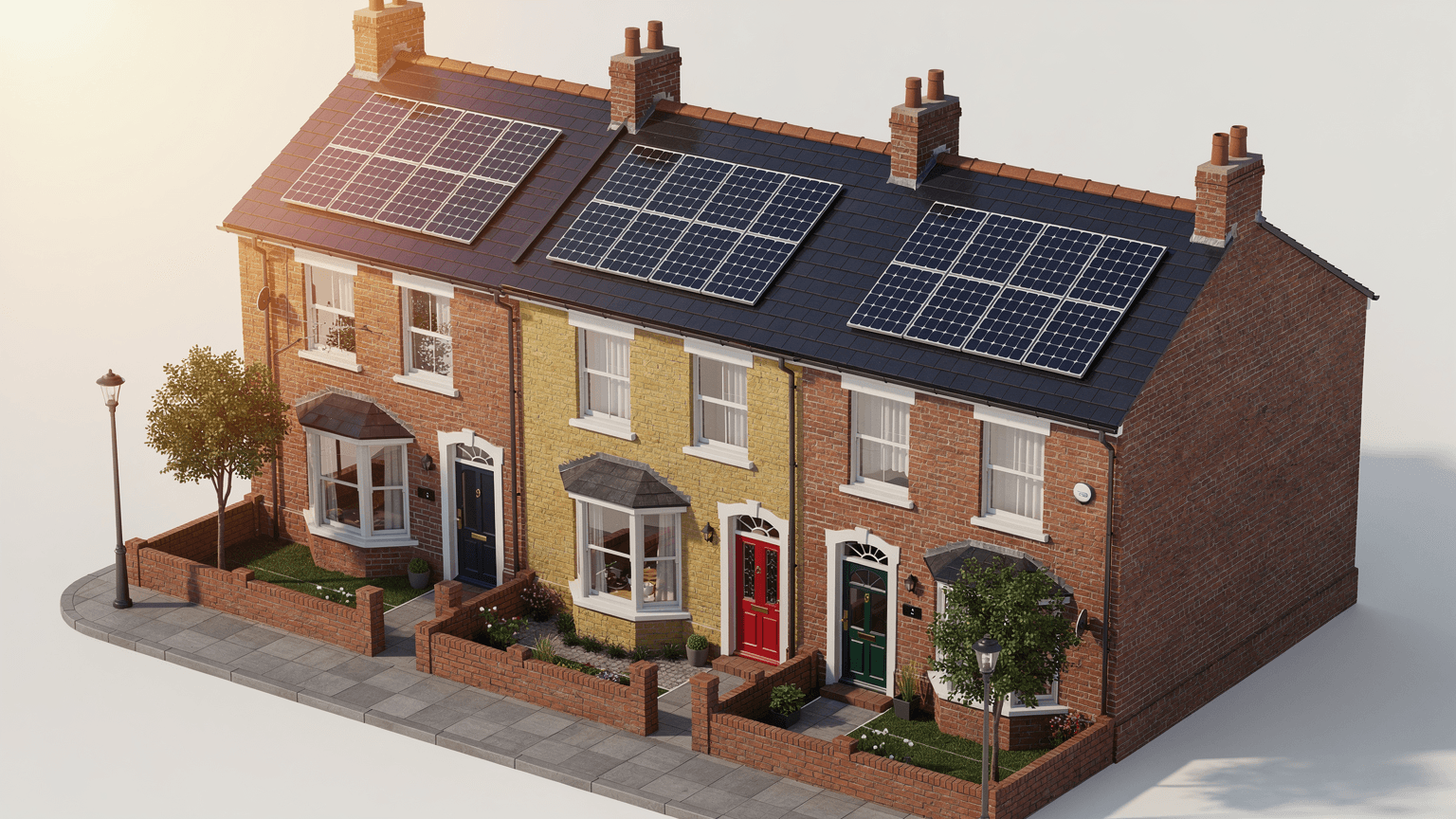
Typical saving: £400–£700+ per year, rising as tariffs rise. A 3.5 kWp solar panel system on a south-facing UK roof generates approximately 2,800–3,200 kWh per year. At the current price cap rate, every kilowatt-hour you generate and use yourself saves you 24.67p. For a household that self-consumes around 40% of its generation (typical without a battery), that’s roughly 1,100–1,300 kWh of avoided grid imports — worth £270–£320 per year in electricity savings. The remainder exported under the Smart Export Guarantee adds further income.
Solar also benefits from 0% VAT on the full installation cost, a policy that has been in place since April 2022 and extended through March 2027 by the UK government. This effectively cuts the price of a typical 3.5 kWp system by around £350–£500 compared with the previous 20% rate.
The full breakdown of costs, payback periods, and which system size suits which household is covered in our solar panel cost and savings guide. Whether the economics stack up for your specific home — roof orientation, shading, electricity consumption — is the subject of our are solar panels worth it guide.
Home battery storage: maximise what your solar generates
Typical additional saving: £150–£300 per year on top of solar savings. Without a battery, a solar household typically self-consumes around 30–45% of its generation — the rest goes to the grid at export rates. Add a 5–10 kWh home battery and self-consumption rises to 65–80%, storing surplus daytime generation for evening use when the panels are no longer producing.
At 24.67p/kWh, each additional unit of solar electricity used at home (rather than exported at a typical 13p SEG rate) is worth around 12p extra. Over a year, a battery shifting 1,200–1,500 kWh of exports into self-consumption adds roughly £145–£180 in savings — on top of the solar-only figures above. Battery storage also qualifies for 0% VAT (extended to standalone battery installations from 1 February 2024), reducing upfront cost. See our home battery storage guide for full costs and a brand comparison.
Smart EV charging: use cheap overnight electricity
Typical saving: £300–£800 per year for EV owners, versus standard rate charging. If you own or are planning to buy an electric vehicle, how and when you charge makes an enormous difference to your bills. Intelligent Octopus Go — the UK’s most popular EV-specific tariff — offers off-peak charging at around 7–9p/kWh for up to six hours overnight. At the Q2 2026 price cap rate of 24.67p/kWh, that represents a saving of around 15–17p per unit. For a car requiring 10 kWh per overnight session, that is £1.50–£1.70 saved every night you charge — roughly £500–£600 per year at typical charging frequency.
Pairing an EV tariff with solar means you can prioritise solar generation for daytime EV charging and use the cheap overnight rate for top-ups, stacking both savings. Our best home EV charger guide covers charger models compatible with smart scheduling.
Heat pumps: slash resistance-heating electricity use
Typical saving vs direct electric heating: 60–70% of heating electricity costs. If any part of your home uses direct electric heaters — panel heaters, storage heaters, electric towel rails — switching to an air source heat pump can dramatically cut the electricity consumed. A heat pump’s Seasonal Coefficient of Performance (SCOP) of around 3.0 means it delivers three units of heat for every unit of electricity consumed. A direct electric heater has a COP of exactly 1.0. For a household spending £800 per year on electric heating, a heat pump could bring that to roughly £265 — a saving of over £500 annually. The UK government currently offers a £7,500 Boiler Upgrade Scheme grant towards the cost of installing an air source heat pump.
Government schemes that reduce upfront costs
ECO4 and the Warm Homes Plan
If your household receives means-tested benefits (Universal Credit, Pension Credit, or similar) or your income falls below your council’s LA Flex threshold (typically £31,000–£38,000 depending on household size), you may qualify for free or heavily subsidised energy efficiency upgrades under the ECO4 scheme, which runs until December 2026. Eligible measures include insulation, heating controls, and in some cases solar panels. The Warm Homes Plan — the government’s flagship programme replacing ECO4 from January 2027 — commits £13.2 billion to home energy upgrades for low-income and fuel-poor households, covering insulation, heat pumps, solar, and glazing. Our solar grants UK guide covers the full range of available funding.
0% VAT on renewable technologies
Since April 2022, solar panels and heat pumps have attracted 0% VAT on installation. Battery storage was added to the 0% rate from 1 February 2024, including standalone batteries retrofitted to existing solar systems. This relief runs until March 2027, after which 5% VAT will apply. Installing before that date locks in the better rate.
Putting it together: a savings hierarchy
The most effective strategy layers these measures. Start with LED lighting and standby reduction — both cost under £100 and pay back in months. Add a smart thermostat if you have a gas boiler and a variable schedule. Then, if you own your home and have a suitable roof, solar panels deliver the biggest single reduction in electricity bills, particularly when paired with a battery to maximise self-consumption. EV owners should add a smart charging tariff regardless of whether they have solar. And for households currently relying on any form of electric resistance heating, a heat pump should be near the top of the priority list. To keep all your systems running at peak efficiency year-round, our home energy annual checklist provides a full seasonal maintenance schedule covering boilers, insulation, solar, batteries, and tariff reviews.
FAQs
What is the quickest way to start cutting my electricity bill?
How much can solar panels save on my electricity bill in the UK?
Is a smart thermostat worth it for reducing heating costs?
Do I need a battery to get the most from solar panels?
Can EV owners save money by charging overnight?
Sources — verified 7 June 2026
- Ofgem — Changes to energy price cap between 1 April and 30 June 2026 (Q2 2026 unit rate 24.67p/kWh, standing charge 57.21p/day) — www.ofgem.gov.uk
- Ofgem — Average gas and electricity use explained (typical household 2,700 kWh/yr electricity) — www.ofgem.gov.uk
- Energy Saving Trust — Energy saving light bulbs and lighting (LED saves ~£40/yr; lighting = 11% of household electricity) — energysavingtrust.org.uk
- GOV.UK — VAT energy-saving materials relief extension (0% VAT on solar, batteries, heat pumps; battery storage added 1 Feb 2024) — www.gov.uk
- Octopus Energy — Intelligent Octopus Go (off-peak EV charging rate ~7–9p/kWh, up to 6 hrs/night) — octopus.energy
- Centrica / Hive — Smart thermostat savings data; Energy Saving Trust estimate £75–£150/yr — www.centrica.com
- GOV.UK — Boiler Upgrade Scheme (£7,500 grant for air source heat pumps) — www.gov.uk
- Warm Homes UK — ECO4 scheme 2026 eligibility (means-tested benefits, LA Flex income thresholds) — warmhomeuk.co.uk

About the author
Sepehr
Solar specialist & co-founder, Smart Solar Homes
Solar specialist and co-founder of Smart Solar Homes, which works with MCS-certified UK installer partners. I write all the guides and reviews here; the aim is straight-talking education the industry rarely provides.
Citing this page? Please use a dofollow link back to the original article — it helps us keep the data on this page accurate and up to date.
Browse Solar Panels on Smart Solar Homes


Want to compare these side by side? Use the compare tool →
Or browse all Solar Panels on Smart Solar Homes.
Related reading
More on solar panels from the editorial team.
Find installers near you
MCS-certified solar installers covering these areas.