Record EV Sales in September 2026: 28.3% Share
Written and reviewed by Sepehr. See our editorial policy.
Battery electric cars took 28.3% of all new car registrations in the UK in September 2026, with a record 99,201 sold in a single month, according to figures published by the Society of Motor Manufacturers and Traders (SMMT) on 5 October. That is up 36.3% on September 2025 and works out at almost five new EVs every minute. September is the month the industry had called the "acid test" for electric demand, so here is what the record EV sales figures say, where the ZEV Mandate stands, and what it means if you are planning home charging.
The September 2026 numbers
The whole market grew. The SMMT reports 350,536 new cars registered in September, up 12.0% year on year and the tenth consecutive month of growth. Private demand rose 13.9% to 149,166 cars, while fleet registrations rose 9.6% to 190,998.
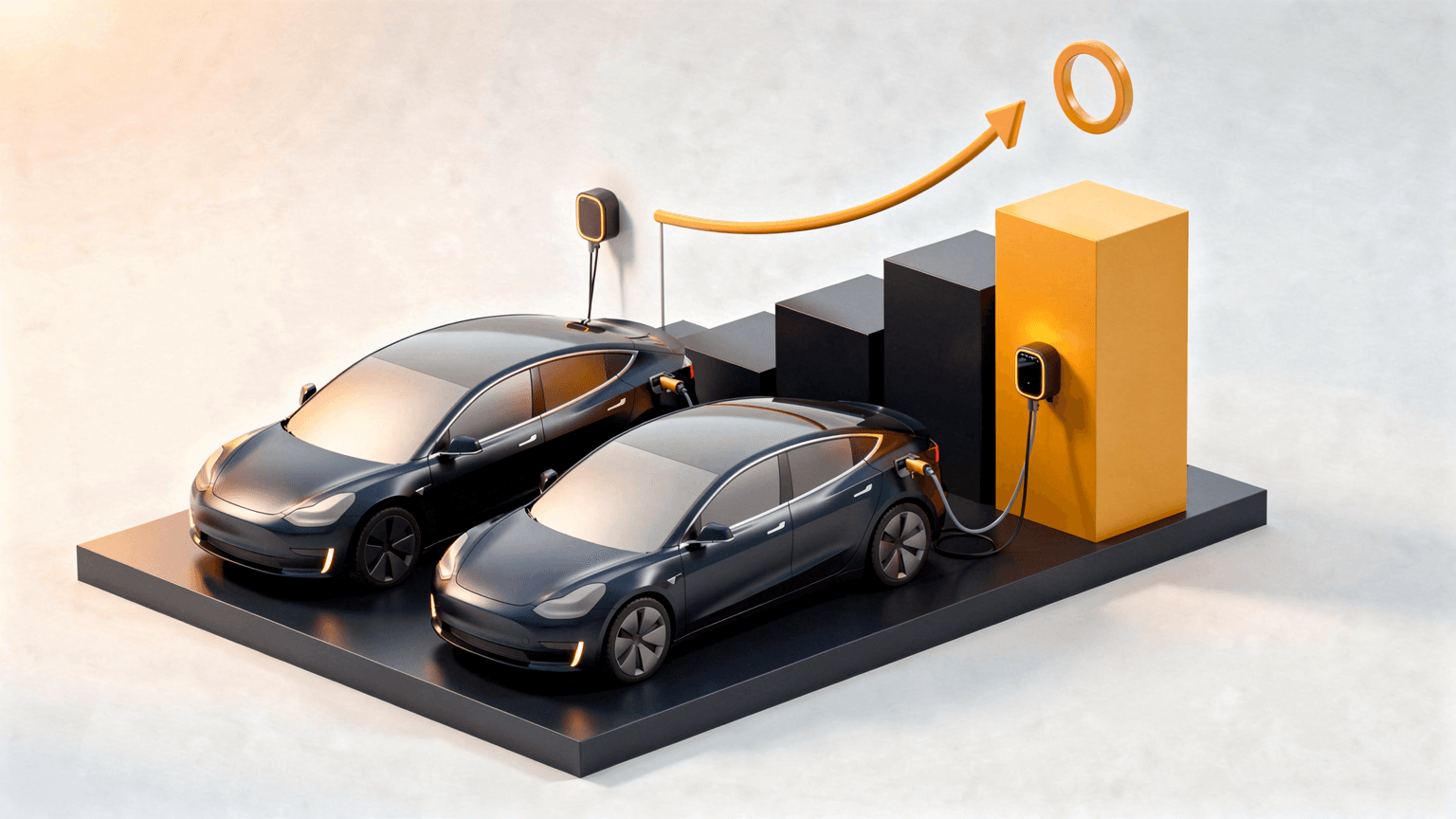
Electric set a volume record. Battery electric vehicles (BEVs) reached 99,201 registrations, a 28.3% share, about five percentage points higher than a year earlier. Plug-in hybrids grew even faster, up 55.5% to 59,571 cars and a record 17.0% share. Conventional hybrids slipped 4.3% to a 13.1% share. Petrol fell 6.7% to 131,864 cars, a 37.6% share, while diesel rose 11.5% to a 4.0% share. Taken together, electrified vehicles (BEV, plug-in hybrid and hybrid) took a record 58.4% of registrations.
Tesla led the EV charts. The Tesla Model 3 was the best-selling electric car with 9,929 registrations, followed by the Tesla Model Y (5,946) and the BYD Sealion 7 (3,191). Overall, the Jaecoo 7 was the best-selling new car of the month with 10,814 registrations.
Year to date, EVs are at about a quarter of sales. Across January to September, 454,947 BEVs have been registered, a 26.2% share and up 30.2% on the same period of 2025. For comparison, the August figure was a 29.8% share on a much smaller monthly volume, which we covered in our August 2026 EV sales report. September is a bigger month because of the 76-plate change, so a lower percentage share on roughly three and a half times the volume is the more meaningful result.
Where the ZEV Mandate stands after September
The headline 2026 target is 33%. At 26.2% year to date, the market is still short of that number, and the SMMT release notes that closing the gap would need a very large fourth quarter. The SMMT used the release to repeat its call for the mandate to be reviewed so that it better reflects market development.
The government is already reviewing it. The Department for Transport opened a consultation on the Zero Emission Vehicle Mandate on 14 August 2026, covering the yearly headline targets and how the 2030 phase-out of new cars that rely solely on internal combustion engines is defined. It closes on 23 October 2026.
The headline figure is not the whole picture. Manufacturers can bank credits, borrow against future years and earn credits for cutting emissions on non-electric models, which lowers the share they have to hit in practice. Analysts at New AutoMotive put the effective 2026 requirement well below 33%, which is why industry and campaigners can both claim the data supports their case.
Why EV demand keeps rising
Choice and price. The SMMT says buyers are responding to the growing choice of models, and EV Powered reports that the number of available EV models has more than doubled since 2023 to 178. The Electric Car Grant, worth up to £3,750 off eligible new EVs, and manufacturer discounts have helped narrow the price gap with petrol.
Fuel prices. The SMMT chief executive also pointed to high fuel prices as a reason more consumers are considering electric. The used market is following: AA Cars reported a 49.6% year-on-year increase in EV searches, with September up 37% on August.
What this means for home charging and solar
Book the survey early. A record month of registrations means a rush of new owners wanting a charge point in quickly. If you have an EV on order, arrange the installer survey as soon as you can. Our EV charger installation guide covers the survey, consumer unit checks and commissioning, and our best home EV charger round-up compares the units worth shortlisting.
Home charging is where the savings are. Ofgem raised the energy price cap by 4% for 1 October to 31 December 2026, to £1,723 for a typical household, mostly because of higher gas costs. Electricity-only users see a much smaller rise, but a standard variable rate is still not the cheapest way to charge, so check whether a dedicated EV tariff suits your driving. VAT is another factor, and our EV charging VAT guide explains the tax gap between home and public charging.
Solar can cover part of the bill. If you already have panels, a solar-aware smart charger can divert surplus daytime generation into the car instead of exporting it. We explain how much roof you need in solar panels for EV charging.
The bottom line
September answered the question the industry set itself: electric demand holds up when volumes surge, with a record 99,201 registrations and a 28.3% share. The year-to-date share of 26.2% is still behind the 33% headline mandate target, and the consultation closing on 23 October will decide how that target is set from here. For households, the practical takeaway is simpler: with more EVs on the road, getting a home charger booked and choosing the right tariff matters more than ever.
FAQs
How many electric cars were sold in the UK in September 2026?
What percentage of new cars are electric in the UK in 2026?
What was the best-selling electric car in the UK in September 2026?
Is the UK meeting its ZEV Mandate target in 2026?
Is the energy price cap going up in October 2026?
Sources — verified 6 October 2026
- SMMT, “Record electric car market powers bumper September” — www.smmt.co.uk
- SMMT, “EVs lift August new car market but September is key test” — www.smmt.co.uk
- EV Powered, “EVs take record number of all new car sales in September 2026” — evpowered.co.uk
- GOV.UK (Department for Transport), “Zero emission vehicle mandate review consultation” — www.gov.uk
- GOV.UK, “Discount of up to £3,750 on electric cars set to slash costs for thousands” — www.gov.uk
- Ofgem, “Energy price cap will rise by 4% from October 2026” — www.ofgem.gov.uk
- Energy and Climate Intelligence Unit, “EVs reached 30% market share in August - New AutoMotive: comment” — eciu.net

About the author
Sepehr
Solar specialist & co-founder, Smart Solar Homes
Solar specialist and co-founder of Smart Solar Homes, which works with MCS-certified UK installer partners. I write all the guides and reviews here; the aim is straight-talking education the industry rarely provides.
Citing this page? Please use a dofollow link back to the original article — it helps us keep the data on this page accurate and up to date.
Browse EV Chargers on Smart Solar Homes


Want to compare these side by side? Use the compare tool →
Or browse all EV Chargers on Smart Solar Homes.
Related reading
More on ev chargers from the editorial team.
Find installers near you
MCS-certified solar installers covering these areas.