EV Charger Installer Qualification Rules: What Changes Now
Written and reviewed by Sepehr. See our editorial policy.
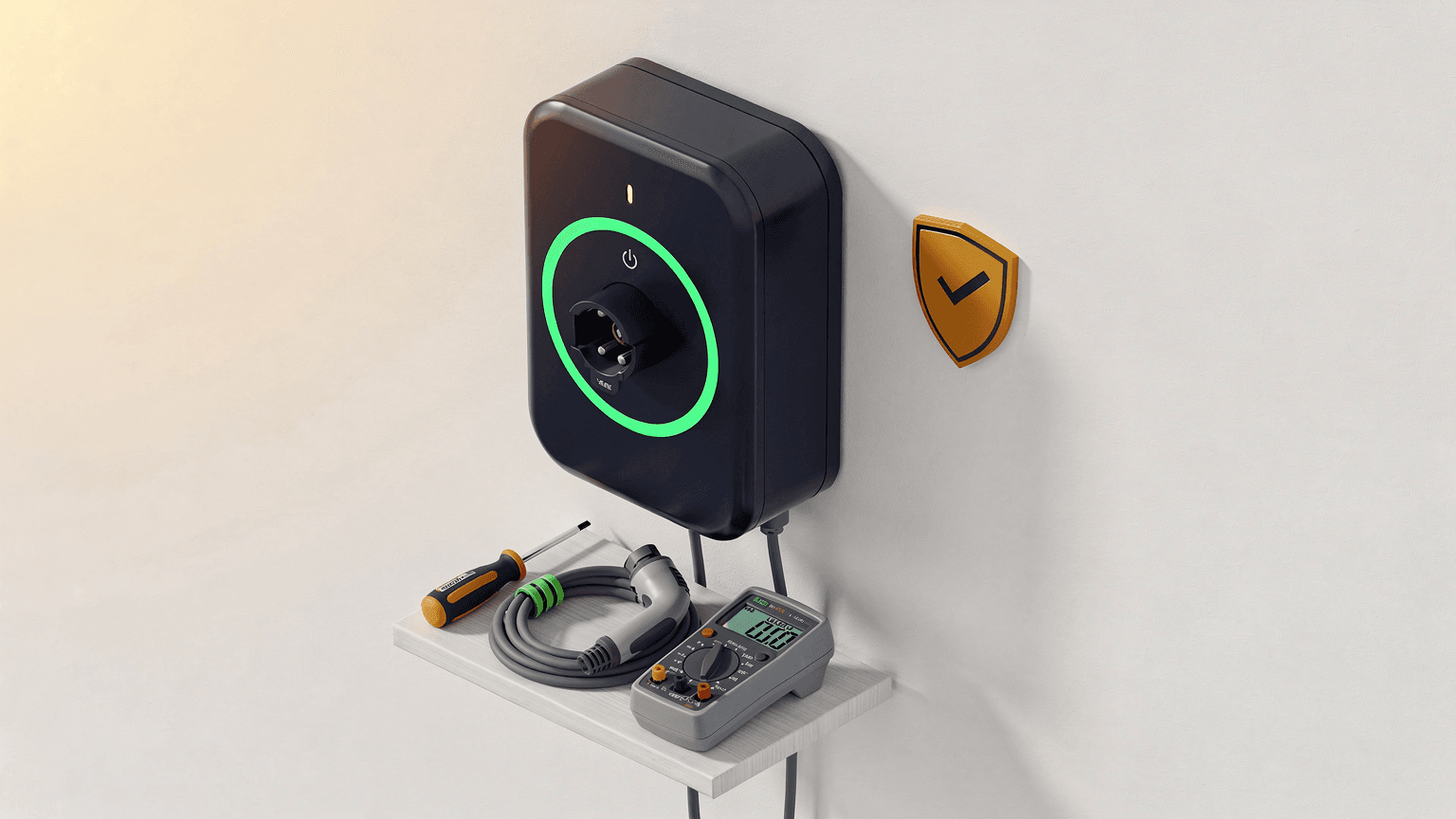
From 1 October 2026, the electricians who fit home EV chargers (and solar panels and home batteries) are expected to hold a specific Level 3 qualification for that work under the industry's Electrotechnical Assessment Specification, or EAS. If you are about to book an EV charger installer, here is what the qualification rules say, what they do and don't change for you, and the questions worth asking before you pay a deposit.
What the EAS change says
The EAS is the competence standard that electrical certification schemes use to assess the businesses they register. According to NICEIC, from 1 October 2026 qualified supervisors and employed persons carrying out low-carbon installation work must hold the relevant Level 3 qualifications. The affected categories are EV charging equipment, solar PV, electrical energy storage systems (home batteries) and micro wind.
NICEIC also makes clear that "employed persons" is wide: it covers directly employed staff, temporary or agency workers, and subcontracted labour, including self-employed electricians. In other words, the person on your driveway with the drill is the one the rule is aimed at, not just the firm's office-based supervisor.
Which qualifications count for EV charging
The ECA, the electrical trade body, says all employed persons doing EV charging installation and all qualified supervisors must hold an acceptable qualification. In March 2026 it noted two City & Guilds awards had been added to the accepted list: 2919-01 (Level 3 Award in Domestic, Commercial and Industrial Electric Vehicle Charging Equipment Installation) and 2919-02 (Level 3 Award in Domestic Electric Vehicle Charging Equipment Installation). NICEIC separately lists the EAL Level 3 Award in the Installation of Electric Vehicle Charging Points as an option it offers.
Trade bodies describe the timeline slightly differently. The ECA notice refers to the EAS competence changes coming into effect on 1 October 2025, while NICEIC points to 1 October 2026 for the Level 3 low-carbon requirement. Rather than rely on either date, ask your installer which qualification each person on your job holds.
What this means for homeowners
It is not a new law you have to comply with. The rule applies to installers and the certification schemes that register them; nothing in the sources above places a duty on the homeowner. The practical effect should be a more consistent baseline of training behind the people fitting wallboxes. It may also shrink the pool of electricians who can legitimately take on charger work, so busy installers could be harder to book. That last point is an inference from the rule, not something the sources forecast.
It does not replace the other checks. A qualification shows an individual can do the work; it doesn't tell you about insurance, workmanship warranties or the firm's registration. Our EV charger installation guide walks through the survey, the install day and the paperwork, and our home EV charger requirements piece covers what your property needs before anyone arrives.
Questions to ask before you book
Who will physically fit the charger? Ask for the name and qualification of the person doing the work, not just the company's credentials. Which scheme is the firm registered with? NICEIC is one example; ask for the registration number and check it with the scheme. Which EV charging qualification do they hold? A named Level 3 award such as the City & Guilds 2919 series or the EAL equivalent is a reasonable answer; a short manufacturer course on its own is a prompt to ask more. Will you get a completion certificate? You should be given paperwork for the job whichever installer you choose.
The same logic applies to solar and batteries
Because the EAS change covers solar PV and battery storage too, the same questions are worth asking when you get quotes for panels or a battery. Solar is already tied to separate standards through MCS; our MCS certificate guide and guide to choosing solar installers explain how to check an installer, and our home battery guide covers what a battery installation involves. A qualification requirement is one more filter, not a substitute for comparing several quotes.
Bottom line: the 1 October 2026 EAS change raises the competence bar for who fits EV chargers, solar and batteries, and it is on installers to meet it. As a homeowner you don't need to do anything differently except ask who is doing the work and which qualification they hold.
FAQs
Do EV charger installers need a qualification from October 2026?
Which qualification should an EV charger installer have?
Does the EAS change apply to self-employed electricians?
Do homeowners have to do anything because of the EAS change?
Sources — verified 1 October 2026
- NICEIC, “Unlocking Level 3: routes to achieving low carbon qualifications required by the EAS” — niceic.com
- ECA, “EV charging installations qualifications update” — www.eca.co.uk

About the author
Sepehr
Solar specialist & co-founder, Smart Solar Homes
Solar specialist and co-founder of Smart Solar Homes, which works with MCS-certified UK installer partners. I write all the guides and reviews here; the aim is straight-talking education the industry rarely provides.
Citing this page? Please use a dofollow link back to the original article — it helps us keep the data on this page accurate and up to date.
Browse EV Chargers on Smart Solar Homes


Want to compare these side by side? Use the compare tool →
Or browse all EV Chargers on Smart Solar Homes.
Related reading
More on ev chargers from the editorial team.
Find installers near you
MCS-certified solar installers covering these areas.