Ofgem January 2027 Price Cap: 26% Rise and Solar
Written and reviewed by Sepehr. See our editorial policy.
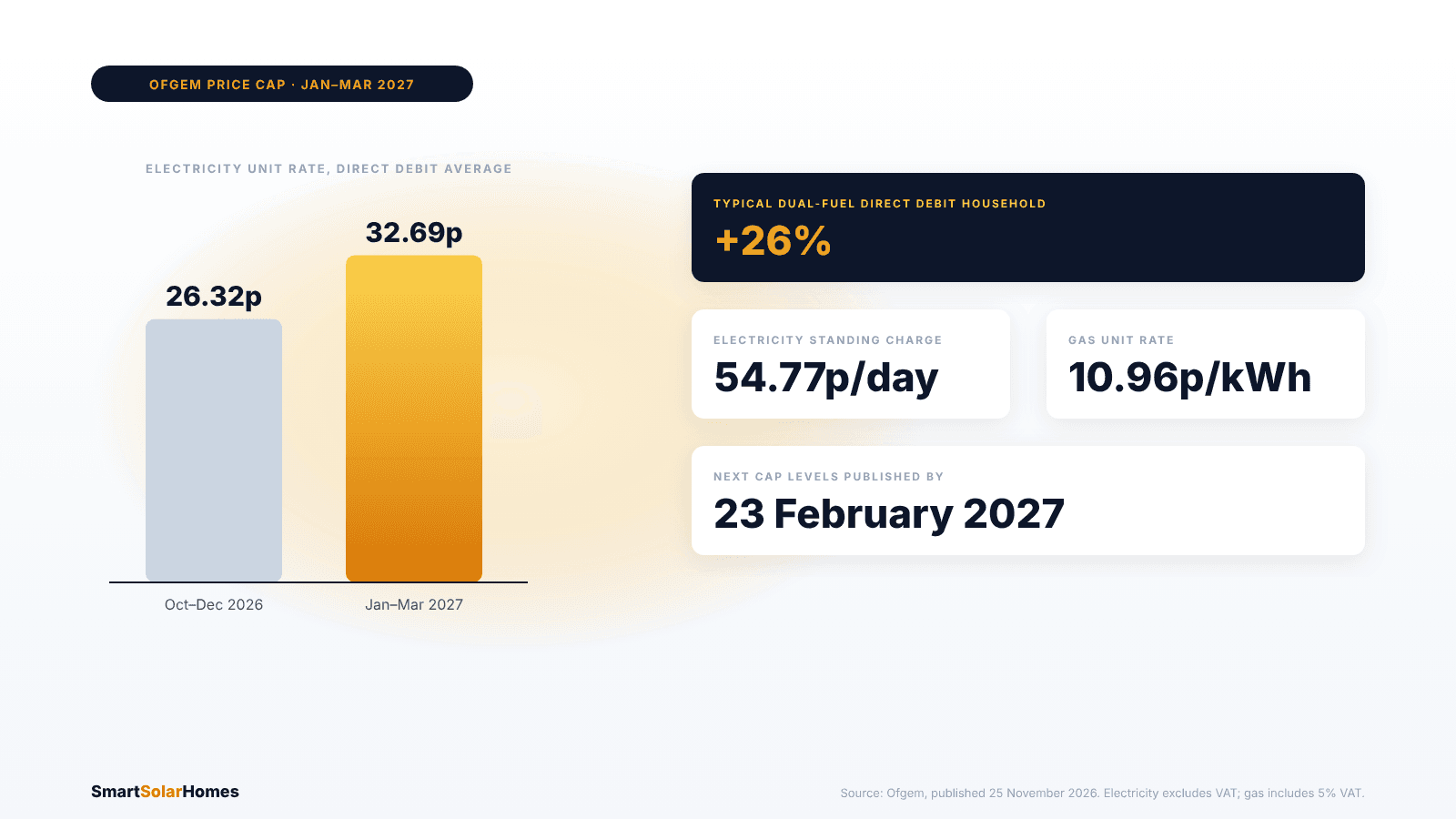
Ofgem confirmed on 25 November 2026 that energy prices will go up by 26% from 1 January to 31 March 2027 for a typical household using electricity and gas and paying by Direct Debit. The average electricity unit rate rises to 32.69p per kWh, with a standing charge of 54.77p a day. For anyone with solar panels, a battery or an EV, the unit rate is the number that matters most, because it sets what each self-used kilowatt-hour is worth. Here is what Ofgem published, and what it means.
What did Ofgem announce?
Figures are Ofgem’s averages across England, Scotland and Wales for default (standard variable) tariffs paid by Direct Debit, for 1 January to 31 March 2027.
- Electricity: 32.69p per kWh and a standing charge of 54.77p per day, not including VAT (see below).
- Gas: 10.96p per kWh and a standing charge of 29.65p per day, including 5% VAT.
- Headline: prices up 26% for a typical dual-fuel Direct Debit household.
The cap does not affect you if you are on a fixed-rate tariff, and it limits unit rates and standing charges, not your total bill: the more you use, the more you pay. Ofgem will publish the next levels, for 1 April to 30 June 2027, by 23 February 2027.
How does that compare with October?
Our October price cap breakdown recorded an electricity unit rate of 26.32p and a standing charge of 54.83p, with gas at 7.97p and a standing charge of 29.68p. Against those figures, the electricity unit rate is up about 24% (32.69p versus 26.32p) while the electricity standing charge is almost unchanged. Gas is up about 38% (10.96p versus 7.97p). Ofgem says costs cannot be compared directly to previous periods because of the VAT change below, and attributes high wholesale gas prices to the ongoing war in the Middle East. Our earlier forecast article used a Cornwall Insight prediction; the confirmed numbers are higher than that forecast.
What is happening with VAT and the £100 payment?
Ofgem says the government has removed VAT from electricity bills for the price cap period 1 October 2026 to 30 June 2027, so VAT is not included in the electricity figures; gas still carries 5%. That end date differs from the 31 March 2027 date some earlier coverage used, including parts of our own guides, so check our VAT on electricity bills guide against Ofgem’s wording. Ofgem also notes the government has announced that around 20 million households will receive £100 towards their energy bill from January, and has asked for standing charges to be removed from gas bills in 2027 or as soon as possible afterwards, with Ofgem working on options.
What does a higher unit rate mean for solar?
Every kilowatt-hour of solar you use yourself saves the unit rate you would otherwise pay. As illustrative arithmetic only, 1,000 kWh of self-used solar is worth about £327 at 32.69p, against about £263 at 26.32p, a difference of roughly £64. Your actual saving depends on how much you use, when, and your tariff. If you are on a fixed or time-of-use tariff, your rate will differ from the cap. Solar export is different: Smart Export Guarantee rates are set by suppliers, not the price cap, so see our SEG rates guide.
Does it change the case for a battery?
A higher unit rate generally raises the value of shifting solar into the evening, though how much depends on your battery size and usage. Ofgem notes some suppliers offer half-price or lower electricity at quiet times to people with a smart meter or low carbon technologies. See are solar batteries worth it and Ofgem’s time-of-use price cap review.
What should you do now?
- Check which tariff you are on. The cap only applies to default tariffs.
- Look at the unit rate on your own bill before doing any solar maths, and see our price cap explainer.
- If you are struggling to pay, Ofgem says tell your supplier: they must help if you ask.
FAQs
How much is the Ofgem price cap from January 2027?
What is the gas price cap from January 2027?
Does the price cap affect me if I am on a fixed tariff?
Is there VAT on electricity in the January cap?
What does the price cap rise mean for solar panels?
When is the next price cap announcement?
Sources — verified 25 November 2026
- Ofgem, “Changes to energy price cap between 1 January and 31 March 2027 (25 November 2026)” — www.ofgem.gov.uk

About the author
Sepehr
Solar specialist & co-founder, Smart Solar Homes
Solar specialist and co-founder of Smart Solar Homes, which works with MCS-certified UK installer partners. I write all the guides and reviews here; the aim is straight-talking education the industry rarely provides.
Citing this page? Please use a dofollow link back to the original article — it helps us keep the data on this page accurate and up to date.
Browse Solar Panels on Smart Solar Homes


Want to compare these side by side? Use the compare tool →
Or browse all Solar Panels on Smart Solar Homes.
Related reading
More on solar panels from the editorial team.
Find installers near you
MCS-certified solar installers covering these areas.