Roaming MPAN: Public EV Charging on Your Home Tariff?

Written and reviewed by Sepehr. See our editorial policy.
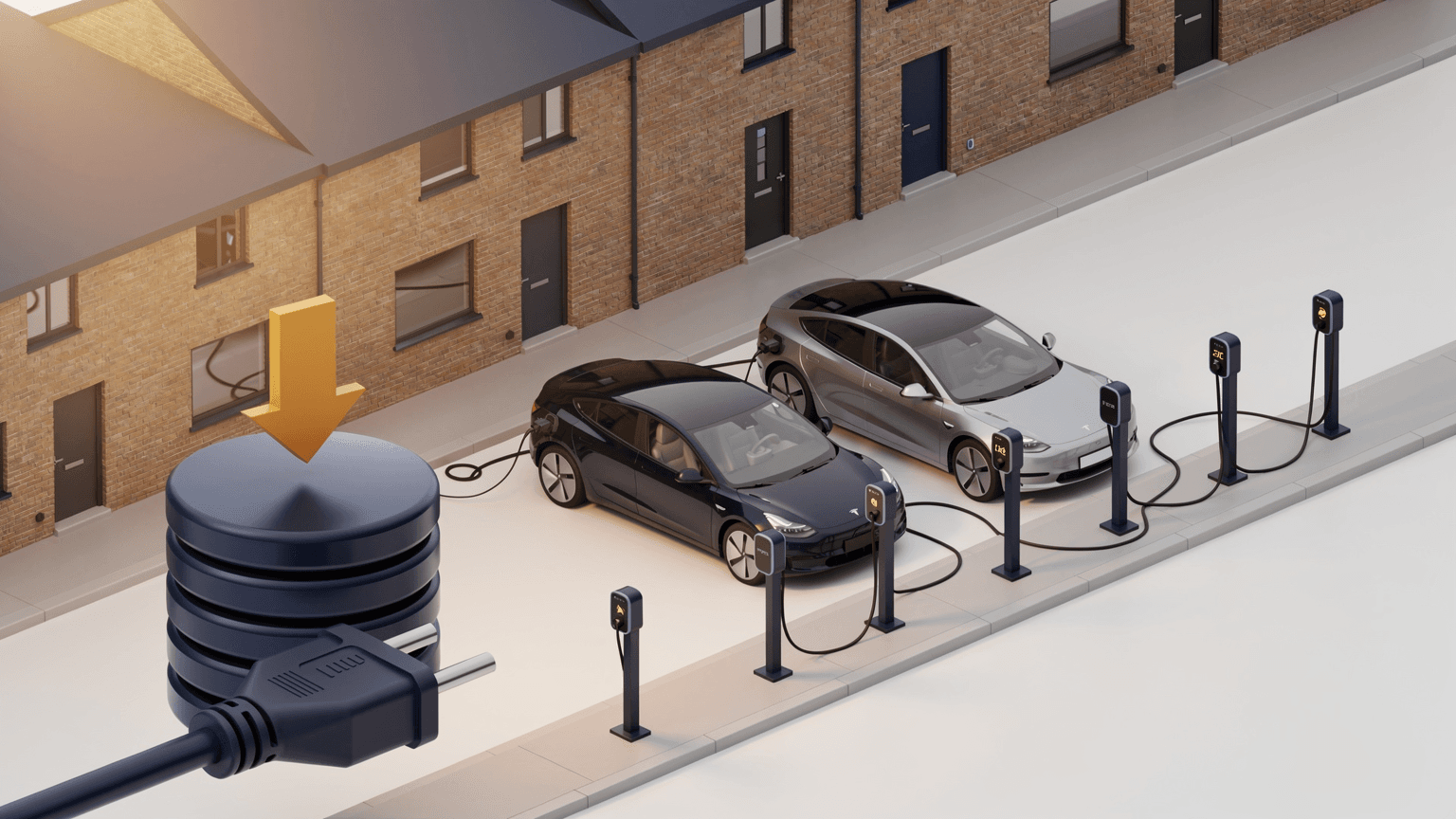
Roaming MPAN is a government-backed trial idea that would let you charge at a public chargepoint and have the electricity billed to your home account, at your home tariff, instead of paying the chargepoint operator's pence-per-kWh rate. It is at the earliest "discovery" stage, so nothing is available to use, but it is the most concrete UK attempt yet to give drivers without a driveway the cheap overnight rate that home chargers enjoy. Here is what has been announced, how it would work, and what it could mean for you.
What is the Roaming MPAN project?
On 4 September 2026, SSEN Distribution announced that Roaming MPANs had won £166,092 of discovery-phase funding from Ofgem's Strategic Innovation Fund, delivered with Innovate UK, according to SSEN's announcement. The delivery partners are CENEX, Charge My Street, EDF Energy and Smart DCC. SSEN describes the concept as letting bill payers use their domestic electricity tariff "wherever they connect to use power", aimed at people who cannot install a home charger and so pay more for public charging.
An MPAN (Meter Point Administration Number) is the 13-digit number that identifies your electricity supply point. If you have solar, you may already know it from your export arrangements: see our guide to SEG payments and the export MPAN. The idea is to use that identifier so energy drawn at a public chargepoint is attributed to your home account.
How would charging on your home tariff work?
As EV Infrastructure News reported on 16 September 2026, the core mechanism is reassigning the energy volumes measured at a public chargepoint to a customer, identified by their MPAN, so the cost is added to their home electricity bill. Cenex said the reassignment has to be "clear and fair". How the cost would be bundled into a domestic bill is still being worked out.
SSEN also argues there is a network benefit: the project aims to encourage overnight, off-peak charging, which could reduce the need for network reinforcement. Frank Clifton, SSEN Distribution's innovation manager, noted that around one pound in every five on electricity bills goes towards operating and improving the network.
What stage is it at, and when could it arrive?
It is early. EV Infrastructure News sets out three phases: a four-month discovery phase to test viability, an eight-month alpha phase to build a prototype or proof of concept, and a multi-year beta phase intended for Great Britain-wide deployment. Discovery work only started after the September award, and there is no published date for any public trial. SSEN's own project lead acknowledged "a certain element of risk" at this stage, so it may not progress at all.
The open questions
Business model. Chargepoint operators currently have to advertise a pence-per-kWh price. If you pay your supplier instead, operators may need to be paid through subscriptions, day rates or a cost-recovery model. That is still being scoped.
Price and VAT. Neither SSEN nor EV Infrastructure News gives a savings figure, and neither mentions VAT. This matters because the current rules differ: household electricity, including home charging, is at 0% VAT from 1 October 2026, while the RAC confirms public chargers remain at the full 20% rate. Whether a roamed kWh would take the home VAT treatment is not addressed in the announcements, so do not assume a saving until the design is published. Our explainer on EV charging VAT at home versus public covers the background.
Verification and fairness. The reporting says it is not yet explained how a driver would prove which MPAN to bill at the start of a charge, or how the scheme would work in practice across suppliers.
How it fits with the Budget's public charging measures
The Budget set aside £100 million from spring 2027 to cut costs at lower-powered residential-street chargers, and launched a taskforce to explore letting drivers use their domestic tariff at some public chargers. Roaming MPAN is one practical route that taskforce could draw on, though the announcements do not link the two formally. Our Budget public charging costs explainer has the details of what was and was not announced.
What it means if you have solar
Do not expect your solar generation to follow you to a public charger: roaming would bill grid electricity at your tariff, not credit your panels. If you have a driveway, charging an EV with solar panels will stay cheaper. The people this targets are the roughly one-third of households without off-street parking. If that is you, practical options today are a cross-pavement charger (see EV charging with no driveway) or the rights work in our ability to charge guide for renters and leaseholders. For tariff choice in the meantime, see our best EV charging tariff guide.
FAQs
What is a roaming MPAN for EV charging?
Can I charge my EV at public chargers on my home electricity tariff now?
Who is behind the Roaming MPAN project?
Would roaming MPAN make public EV charging cheaper?
Sources — verified 2 November 2026
- SSEN Distribution, “SSEN secures innovation funding for idea which could cut costs for EV drivers who can't charge at home” — www.ssen.co.uk
- EV Infrastructure News, “How a UK innovation project is trying to reduce public EV charging costs” — www.evinfrastructurenews.com
- HM Treasury / GOV.UK, “Cutting electric vehicle charging costs” — www.gov.uk
- RAC, “Autumn Budget 2026: What it means for motorists” — www.rac.co.uk

About the author
Sepehr
Solar specialist & co-founder, Smart Solar Homes
Solar specialist and co-founder of Smart Solar Homes, which works with MCS-certified UK installer partners. I write all the guides and reviews here; the aim is straight-talking education the industry rarely provides.
Citing this page? Please use a dofollow link back to the original article — it helps us keep the data on this page accurate and up to date.
Browse EV Chargers on Smart Solar Homes


Want to compare these side by side? Use the compare tool →
Or browse all EV Chargers on Smart Solar Homes.
Related reading
More on ev chargers from the editorial team.

Find installers near you
MCS-certified solar installers covering these areas.