Solar Roof Checks: Is MCS Screening Enough for Your Roof?
Written and reviewed by Sepehr. See our editorial policy.
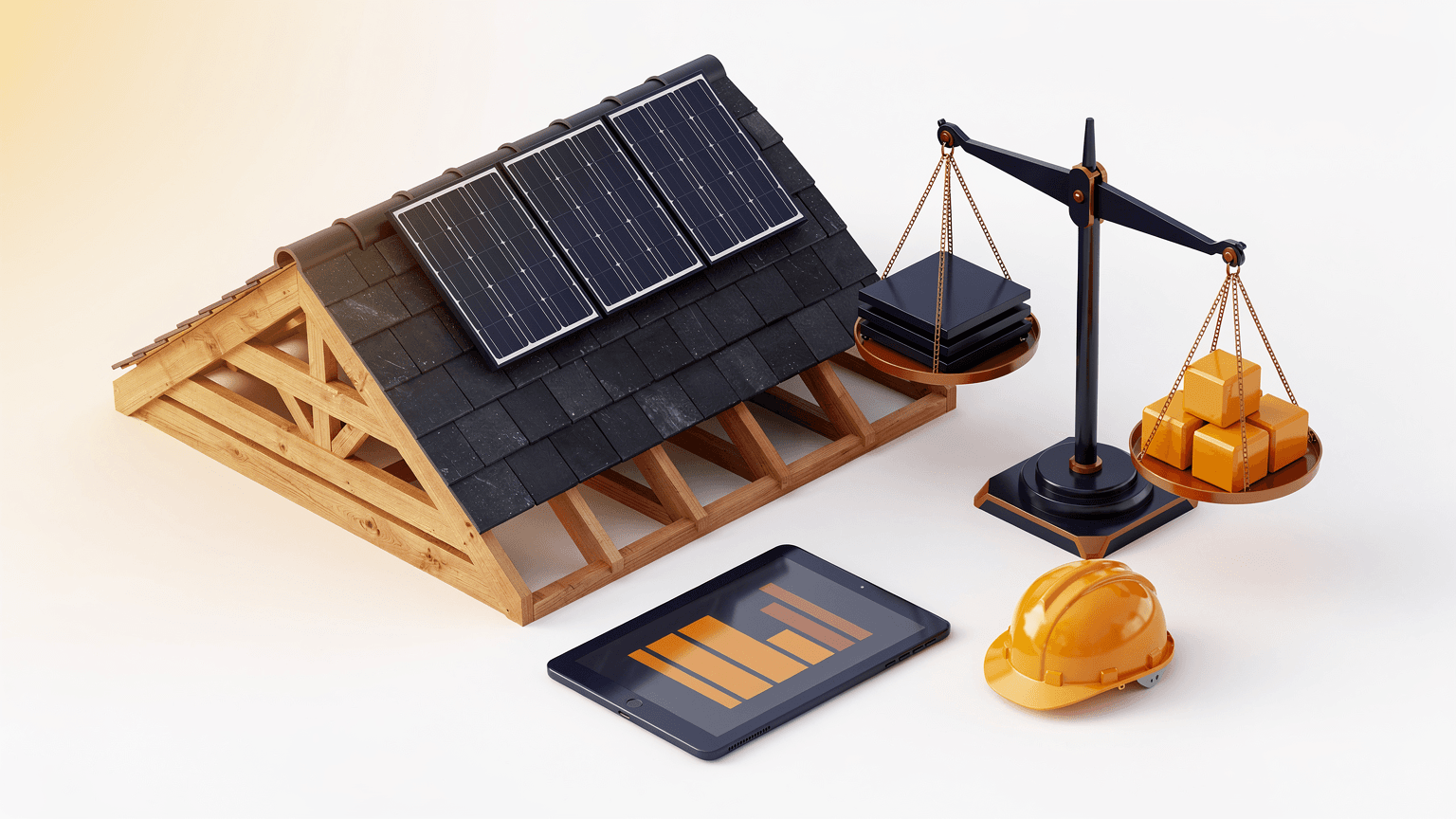
Solar roof structural checks are under scrutiny: a Solar Power Portal feature published on 29 October 2026 reports that the loading figures in MCS guidance may be too blunt to prove a roof can carry panels. The piece quotes Bryan McGrory of BMG Surveys, who says the guidance gives "screening checks not structural checks". For a homeowner signing a quote, the practical question is simple: who actually confirms your roof is strong enough, and what should you ask for?
What the report says about MCS roof loading
According to Solar Power Portal, BMG Surveys has specialised in structural assessments for solar PV since 2011 and says it has assessed over 500,000 roofs. McGrory says the issue is not rapid growth in installations. It is that existing requirements are applied inconsistently.
- The 0.785 kN/m² figure. BMG says it could not substantiate a loading assumption of 0.785 kN/m² in MCS Table 1 against recognised structural design standards.
- 0.75 versus 0.60 kN/m². Another MCS method uses a 0.75 kN/m² imposed-loading allowance. BMG argues 0.60 kN/m² is more appropriate for the relevant roof types and design periods.
- Software has limits. Simplified calculation tools are useful, but they depend on the user correctly identifying the roof construction and entering accurate data.
- Competence. McGrory argues assessors should hold an engineering qualification and understand load paths and the whole building envelope, and that regulators should audit competence rather than assume it.
BMG says it is working with MCS on structural elements and proposed amendments. These are one firm's views reported by a trade title, not an MCS finding or a change to the rules, and we have not seen MCS respond. The article notes that MIS 3002, the MCS standard for solar PV installation, has long carried requirements on existing roof suitability and assessor competence. The MCS standards library lists MIS 3002 version 6.0 as the current installer scheme and MIS 3002:2025 version 2.0 as the redeveloped scheme, both issued on 18 March 2026.
What this means if you are getting solar quotes
There is no sign that existing installations are unsafe. The feature argues about how consistently checks are done, and nothing in it reports roof failures. Most pitched, tiled roofs in reasonable condition carry panels without a full engineer's report, as we explain in our solar panel structural survey guide. But "most" is not "yours", so it is worth asking how your installer reached their conclusion.
Questions to put to an installer before you sign:
- Who carried out the roof assessment, and what qualification do they hold?
- Did anyone view the roof structure (rafters, purlins, trusses) from the loft, or was it a desktop check from photos and drawings?
- What roof construction and age did they record, and can you see the assessment?
- Who is liable, and is professional indemnity insurance in place, if the roof later needs remedial work?
- Will the installer commission an independent structural engineer if the roof is old, altered, or non-standard?
The report says structural reports are more common on commercial buildings because insurers, landlords and funders often require them. Domestic customers can ask for the same thing: a short engineer's report is a modest cost against a large installation, though prices vary by property.
Roofs that deserve extra attention
Flat roofs with ballasted mounting, older timber roofs, roofs that have been converted or had loft work, and roofs that need re-covering soon are the usual candidates for a closer look. Our guides to flat roof solar, preparing your roof and re-roofing with solar panels cover these cases. Check too how an installation could affect your roof cover, using our solar panels and roof warranty guide.
Why it matters now
The feature says rooftop installs hit record levels in summer 2026, and the government has announced low- and zero-interest loans for domestic clean energy installations. More installs and easier finance mean more roofs being assessed, so the quality of that assessment matters. Our record installation year coverage has the volumes, and an MCS certificate shows your installer is certified, but it is not a substitute for knowing how your own roof was assessed.
Bottom line: ask to see the roof assessment, ask who did it, and ask for an independent structural report if the roof is anything other than a standard, sound, pitched roof. Any MCS change would come from MCS itself, so watch its announcements rather than trade commentary.
FAQs
Do solar panels need a structural survey in the UK?
What is MIS 3002?
Are MCS roof loading figures wrong?
What should I ask my solar installer about my roof?
Sources — verified 30 October 2026
- Solar Power Portal, “Structural due diligence: The overlooked foundation of the UK's solar rooftop boom” — www.solarpowerportal.co.uk
- MCS, “Standards & Tools Library — MIS 3002 Solar PV Installation Standard” — mcscertified.com

About the author
Sepehr
Solar specialist & co-founder, Smart Solar Homes
Solar specialist and co-founder of Smart Solar Homes, which works with MCS-certified UK installer partners. I write all the guides and reviews here; the aim is straight-talking education the industry rarely provides.
Citing this page? Please use a dofollow link back to the original article — it helps us keep the data on this page accurate and up to date.
Browse Inverters on Smart Solar Homes


Want to compare these side by side? Use the compare tool →
Or browse all Inverters on Smart Solar Homes.
Related reading
More on inverters from the editorial team.


Find installers near you
MCS-certified solar installers covering these areas.