Home Battery on a Flat-Rate Tariff: Overnight Charging UK
Written and reviewed by Sepehr. See our editorial policy.
A home battery on a flat-rate tariff can quietly cost you money. That was the worry in a r/SolarUK thread this week, picked up by The Cool Down on 19 October. A homeowner with a new 20kWh Sigenergy battery, 16 south-facing panels and a 10kW inverter saw zero solar generation after 6pm on day one. They were still on Flexible Octopus, where the unit rate is the same at every hour, and feared the battery might charge from the grid overnight at the 25.36p/kWh rate. The replies explain how to avoid it.
Why a flat-rate tariff makes overnight grid charging a bad idea
Grid charging only pays when the electricity is cheaper than the electricity it replaces. On a flat tariff, every kWh costs the same whether you buy it at 3am or 6pm. Ofgem's price cap for 1 October to 31 December 2026 averages 26.32p/kWh for electricity, and a flat-rate battery that charges overnight and discharges in the evening saves nothing on unit cost. Worse, battery losses mean you pay for more energy than you get back out.
That is why the commenters' advice on the thread was about tariff and settings together, not the battery alone. Our home battery storage guide covers what a battery is for. The short version: on a flat tariff, the job is soaking up your own surplus solar, not buying from the grid.
What self-consumption mode does when the battery runs low
Self-consumption mode runs the house from the battery, then from the grid, and does not top the battery up from the grid. One r/SolarUK commenter explained that once the battery reaches its lower limit, around 10%, the house simply draws from the grid. That draw does not recharge the battery. So the "zero solar after 6pm" reading is not a fault. Panels do not generate in the dark, and the battery has done what the mode asks.
The practical consequence: in this mode the battery refills only from solar. In winter, with short days and weak generation, it may sit near empty for long stretches. That is normal, not a defect, but it shapes what the battery can save you. See our guide to solar panels without a battery for when the extra hardware is not worth it.
Time-based control: scheduling charge and discharge
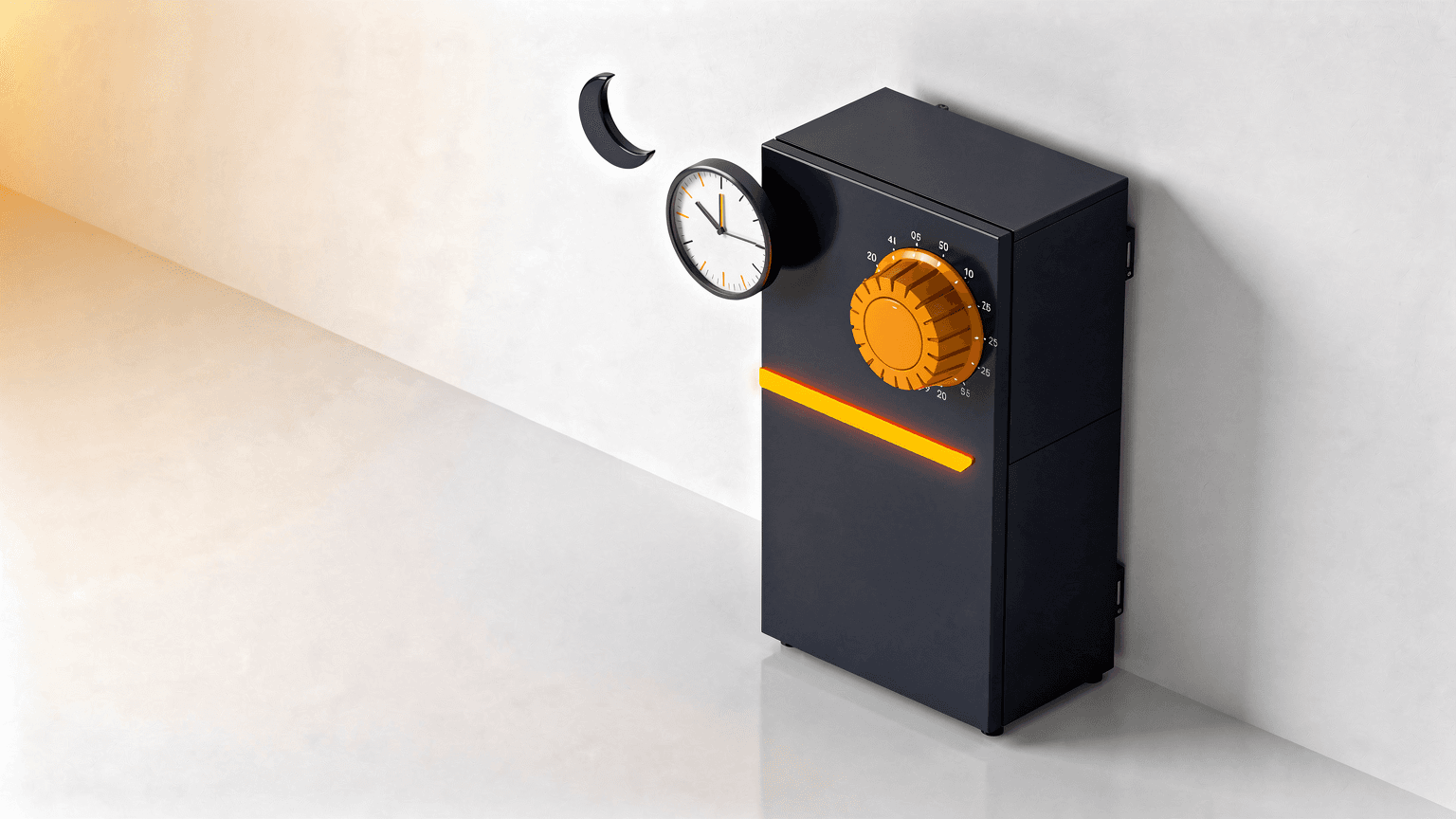
Time-based control lets you decide when the battery charges and discharges. The thread's advice was to move from self-consumption to time-based control, charge during the cheap overnight window and run self-consumption the rest of the time. On Sigenergy systems this is set in the mySigen app, according to a Flow Power guide, which also notes that a self-consumption setup prioritises powering the home, so it may not discharge during a scheduled window. Other brands name these modes differently, so check your own app or installer handover pack.
The poster later moved to Octopus Go with a midnight start date and asked about a 00:30 to 05:30 charge schedule. A schedule only helps if it lines up exactly with your tariff's cheap window, so confirm the window times for your own tariff and region before you set it.
Match the tariff to the battery before you commission it
Settle the tariff first, then the battery settings. A time-of-use tariff such as Intelligent Octopus Go has a cheap overnight window from 8p/kWh for smart-charging eligible cars. Eligibility depends on the tariff and your equipment, so check before you commit. Ask your installer three things:
- Which tariff is the quote based on? If the savings figure assumes a cheap overnight rate and you are on a flat rate, the numbers will not hold.
- Which mode will the battery ship in? Self-consumption is the common default, and it never grid-charges.
- Is the export arrangement in place? Another new owner on the thread was exporting power while "getting nothing for it" because the export tariff was not yet set up. Our guide to solar export payments explains the options.
Our guide to charging an EV from a home battery covers the same trade-off from the car side: cheap overnight grid power is often better spent on the car directly than run through a battery.
Does grid charging ever make sense?
Yes, but only when the gap between the cheap and expensive rate is wide enough to beat the losses. With a cheap overnight rate and a high daytime rate, charging at night and discharging at the evening peak can earn its keep, especially in winter when solar is thin. On a flat rate there is no gap to exploit. For the extreme version of the idea, see our piece on negative electricity prices and home batteries.
What to do if you have just had a battery fitted
Check the tariff on your latest bill, open the battery app and note the current mode, and look at the first week of import data. If the battery is importing heavily overnight on a flat rate, switch it back to self-consumption. If you want grid charging, change to a time-of-use tariff first, then set the schedule. Keep the installer's commissioning sheet, because it should show the settings they chose.
FAQs
Will my home battery charge from the grid overnight?
Is a home battery worth it on a flat-rate tariff?
Why does my solar battery show no solar after 6pm?
What is time-based control on a home battery?
Sources — verified 22 October 2026
- Ofgem, “Changes to energy price cap between 1 October and 31 December 2026” — www.ofgem.gov.uk
- Octopus Energy, “Intelligent Octopus Go” — octopus.energy
- Flow Power, “Sigenergy battery scheduling” — flowpower.com.au
- The Cool Down (via Yahoo Finance UK), “In the UK, a new solar battery looked like a money-saver, until overnight charging realization” — uk.finance.yahoo.com

About the author
Sepehr
Solar specialist & co-founder, Smart Solar Homes
Solar specialist and co-founder of Smart Solar Homes, which works with MCS-certified UK installer partners. I write all the guides and reviews here; the aim is straight-talking education the industry rarely provides.
Citing this page? Please use a dofollow link back to the original article — it helps us keep the data on this page accurate and up to date.
Browse EV Chargers on Smart Solar Homes


Want to compare these side by side? Use the compare tool →
Or browse all EV Chargers on Smart Solar Homes.
Related reading
More on ev chargers from the editorial team.
Find installers near you
MCS-certified solar installers covering these areas.