90% of UK Commercial Roof Space Unused for Solar
Written and reviewed by Sepehr. See our editorial policy.
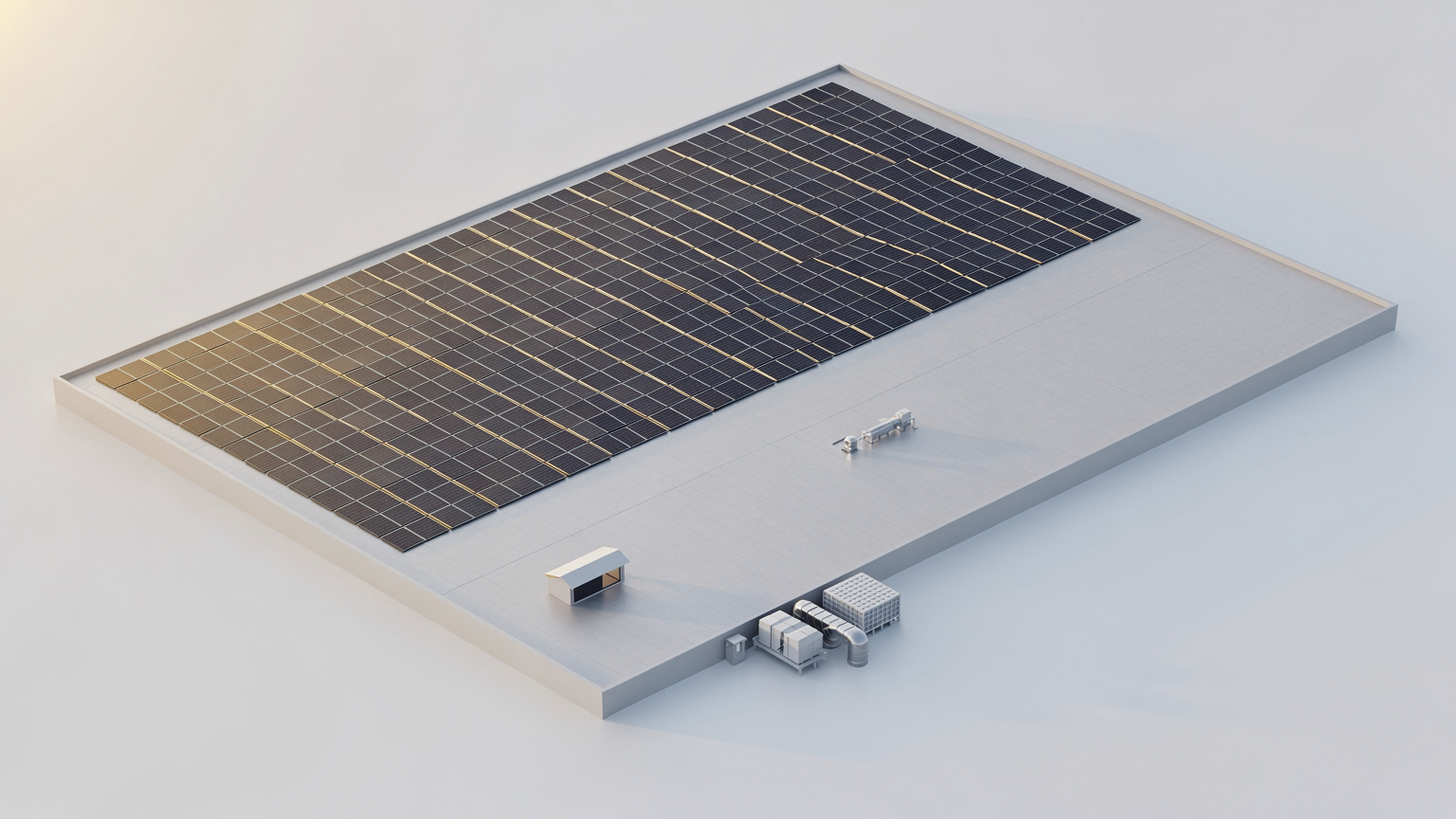
A new report says more than 90% of suitable UK commercial roof space is still unused for solar — a gap the report's authors say is large enough to generate as much electricity as almost 20 Hinkley Point C nuclear power stations. The report, commissioned by Real Estate:UK with law firm Forsters and solar developer Push Power and authored by property consultancy Cushman & Wakefield, surveyed 70 real estate organisations collectively managing more than £500 billion in assets. If you own, lease or manage commercial premises with a roof that's never had solar on it, this is the clearest sign yet that the barrier isn't the economics — it's everything else standing in the way.
What the report found
The headline figure is stark: UK commercial rooftops could theoretically host around 60GW of solar capacity, but only 3–5GW is currently installed. That means under 10% of suitable roof space — warehouses, distribution centres, factories, offices and retail units — is being used. Closing even a fraction of that gap would be significant: a separate, earlier feasibility study by PowerMarket estimated that using just 5% of available commercial rooftop space for solar could save UK businesses an estimated £12.6 billion a year in energy costs — a sign the financial case for commercial rooftop solar has been strong for a while, even as deployment has lagged behind it. Alongside the capacity numbers, 85% of the real estate professionals surveyed said they expect commercial solar deployment to increase, suggesting the appetite is there even if deployment hasn't caught up.
Why so much roof space is sitting empty
The report doesn't put the shortfall down to solar panels being a bad investment — quite the opposite, as the financial figures below show. Instead, it points to structural and regulatory friction: unclear rules on how Real Estate Investment Trusts (REITs) can fund solar, a lack of standardised power purchase agreement (PPA) and lease templates between landlords and tenants, inconsistent insurance treatment for rooftop arrays, and a 50kW cap on permitted development rights that pushes many commercial installations into a full planning application even when the roof itself is a straightforward fit. For a landlord or tenant trying to work out who pays for what, see our guide to commercial solar panels in the UK, which covers ownership models, lease considerations and the planning routes in more detail.
How this compares to the residential solar boom
The contrast with rooftop solar on homes is notable. Domestic solar has grown steadily on the back of falling install costs, 0% VAT on batteries and rising interest in cutting bills, and UK solar generation as a whole hit a record 8.8 terawatt-hours over summer 2026 as deployment continued to climb. Commercial rooftops, by contrast, have lagged despite having larger, often unshaded roof areas and higher daytime electricity demand that lines up well with solar generation — exactly the profile that should make commercial sites easier to justify than a typical semi-detached house. The report's authors argue that closing this gap is less about proving the case for commercial solar and more about removing the lease, insurance and planning friction that residential installers rarely have to deal with.
The financial case the report makes
Cushman & Wakefield modelled a typical 300kWp system costing around £250,000 to install. Under a tenant-funded arrangement, the report estimates a 20% net yield in the first year, with the system paying for itself in about 5.5 years. Under a landlord-funded arrangement — where the landlord bears the capital cost and typically recovers it more slowly through service charge or a PPA with the tenant — the estimated first-year net yield is 12%, with an eight-year payback. Both routes are well inside the working life of a commercial roof and a typical solar panel warranty. For the funding side specifically, including grants, tax reliefs and 0% VAT on qualifying battery and solar installs, see our guide to business solar grants and funding in the UK.
The policy changes the report is asking for
Alongside the numbers, the report sets out seven policy recommendations aimed at central and local government: clearer REIT rules for solar investment, standardised PPA and lease frameworks, consistent insurance standards for rooftop arrays, stronger export revenue mechanisms, faster grid connection reform, long-term certainty on Minimum Energy Efficiency Standards (MEES) enforcement, and raising the 50kW permitted development cap. None of these are new asks individually — industry bodies have raised most of them before — but having them backed by a survey of £500 billion in real estate assets under management adds weight to the case for change.
What this means if you're sitting on an unused roof
If you own or lease a warehouse, factory, office block or retail unit with an unshaded, structurally sound roof, this report is a reminder that the economics have moved a long way from the days when commercial solar was a long-payback, capital-heavy decision. A 5.5–8 year payback on a 25–30 year asset life is a strong case on its own, before accounting for rising and volatile grid electricity prices. The practical next steps are the same ones covered in our wider commercial guides: get a structural survey and roof condition report before anything else (see our guide to solar panels for property developers and new developments if you're planning from the ground up), work out whether a landlord-funded, tenant-funded or third-party PPA model suits your lease structure, and check whether your installation falls under the 50kW permitted development threshold or needs full planning permission. If your roof isn't suitable, or you want to make use of car park space instead, our guide to solar carports covers the alternative most large commercial sites have space for.
FAQs
How much of the UK's commercial roof space is used for solar?
Is commercial rooftop solar a good investment in the UK?
What's stopping more UK businesses installing rooftop solar?
Sources — verified 11 September 2026
- Solar Power Portal, “Report shows commercial rooftop solar could deliver 60GW of UK generation” — www.solarpowerportal.co.uk
- Solar Power Portal, “Using 5% of UK commercial rooftop space for solar could save £12.6 billion annually” — www.solarpowerportal.co.uk
- Construction Management, “UK commercial roof space could generate as much solar power as '20 Hinkley Cs'” — constructionmanagement.co.uk
- PBC Today, “RE:UK report highlights missed opportunities in rooftop solar capacity” — www.pbctoday.co.uk
- Carbon Brief, “Analysis: UK solar power hits record high over summer 2026” — www.carbonbrief.org

About the author
Sepehr
Solar specialist & co-founder, Smart Solar Homes
Solar specialist and co-founder of Smart Solar Homes, which works with MCS-certified UK installer partners. I write all the guides and reviews here; the aim is straight-talking education the industry rarely provides.
Citing this page? Please use a dofollow link back to the original article — it helps us keep the data on this page accurate and up to date.
Browse Solar Panels on Smart Solar Homes


Want to compare these side by side? Use the compare tool →
Or browse all Solar Panels on Smart Solar Homes.
Related reading
More on solar panels from the editorial team.
Find installers near you
MCS-certified solar installers covering these areas.