Tesla Powerwall 2 Fire Risk: UK OPSS Warning Explained
Written and reviewed by Sepehr. See our editorial policy.
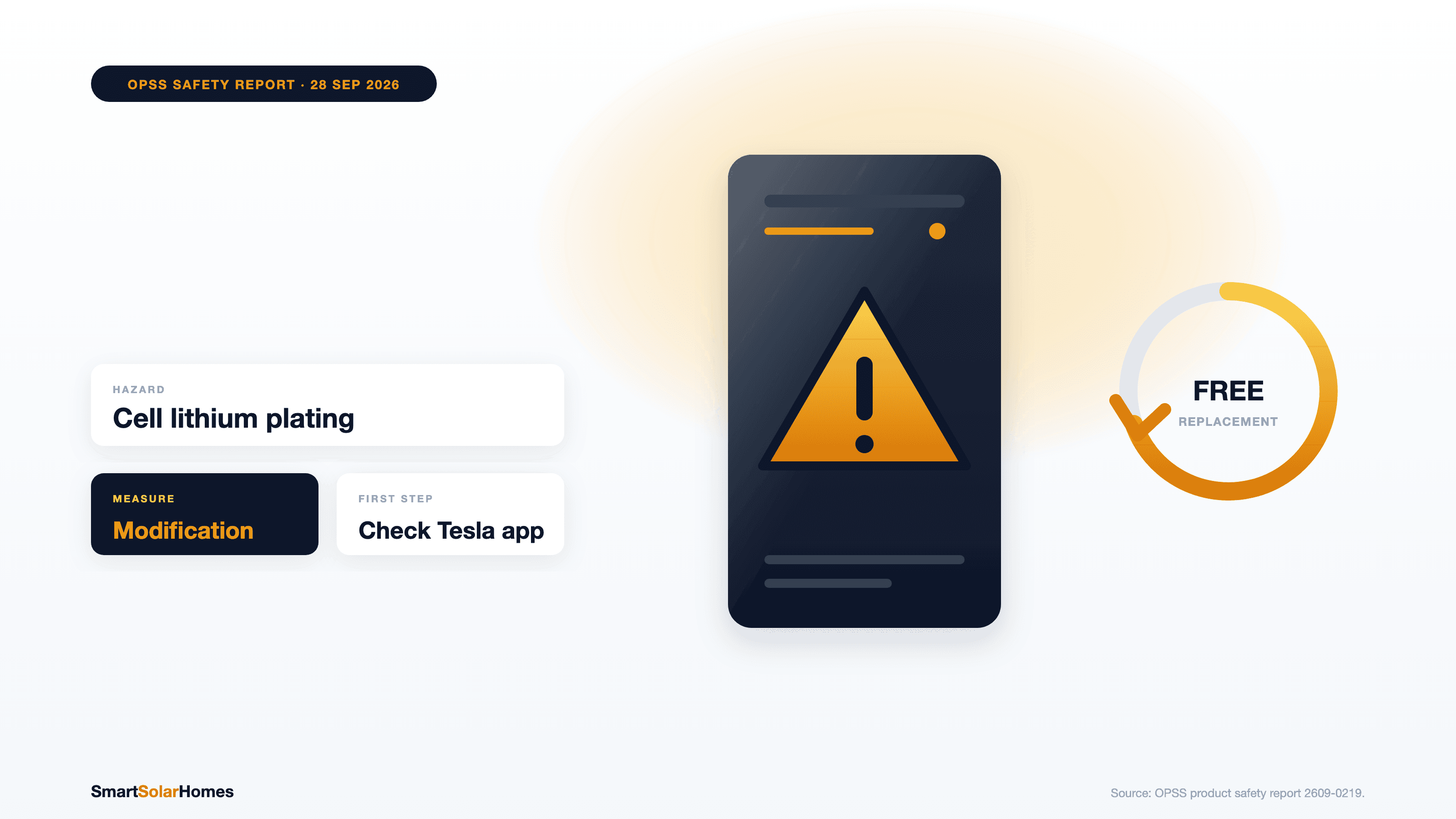
The UK's Office for Product Safety and Standards (OPSS) published a product safety report on the Tesla Powerwall 2 fire risk on 28 September 2026, saying the home battery “presents a risk of fire”. Tesla is replacing affected units free of charge, and most have already been remotely discharged. If you own a Powerwall 2, here is what the notice says, how to check your unit and what to do next.
What the OPSS notice says
The hazard. OPSS says certain battery cells inside the Powerwall 2 may develop internal defects over time. An investigation found that cells made by a third-party manufacturer may contain excessive lithium plating, which can crack the cell casing and cause an internal short circuit. That can lead to thermal runaway — the battery overheating uncontrollably — and so to fire.
The regulatory finding. The report states the product does not meet the requirements of the Electrical Equipment (Safety) Regulations 2016. OPSS classes the measure as a modification programme rather than a product recall: the units stay in place while Tesla replaces them.
What the notice does not say. The government page does not give serial-number ranges, manufacturing dates or the number of affected UK units, and it says only certain Powerwall 2 units are involved — not every unit in the country. Do not assume yours is affected, or safe, until Tesla tells you.
What Tesla is doing about it
According to the OPSS report, Tesla has remotely discharged most affected units while they wait for replacement, and Tesla technicians are discharging the remainder. A free replacement programme is under way. A unit that has been discharged will stop storing energy, so you may notice your solar surplus going back to the grid or your backup cover disappearing until the swap is done.
What to do if you own a Powerwall 2
- Keep the Powerwall online. Tesla contacts affected owners through the app, and both the battery and your phone need an internet connection for the alert to reach you.
- Check the Tesla app for a notification saying whether your unit is affected.
- Contact your installer. If a replacement is needed, OPSS says to contact the original Tesla Certified Installer to arrange it.
- If your installer is unavailable (for example, if they have stopped trading), contact Tesla Support on +44 1628 450630 or use the Powerwall 2 replacement programme page on tesla.com.
Don't try to open, move or re-wire the unit yourself. If you notice heat, swelling, smoke or a burning smell, treat it as an emergency: leave the area and call 999. For the wider picture on whether stored-energy batteries are a worry at home, see our guide to home battery fire risk in the UK.
Is this the same as the 2025 US recall?
It looks like the same underlying problem. In November 2025 around 10,500 Powerwall 2 units were recalled in the US because of a third-party cell defect. At the time that action covered US-sold units and had not been confirmed to affect UK-sold batteries. The OPSS report now confirms a UK action on the same product with a similar cell-related cause, although the notice does not say how many UK units are involved.
What it means if you are buying a battery
It is a reason to ask questions, not to avoid batteries. Reported battery fires remain rare against a fast-growing installed base, and a managed replacement with a remote discharge is how a safety system is supposed to work. But it is a useful prompt to check three things before you buy any battery:
- Chemistry: most new home batteries use lithium iron phosphate (LFP), which is more stable under fault conditions than the NMC-type cells used in older units.
- Installer: choose an MCS-certified installer who will still be around to handle warranty and safety work; our guide to the best solar installers in the UK covers how to vet one.
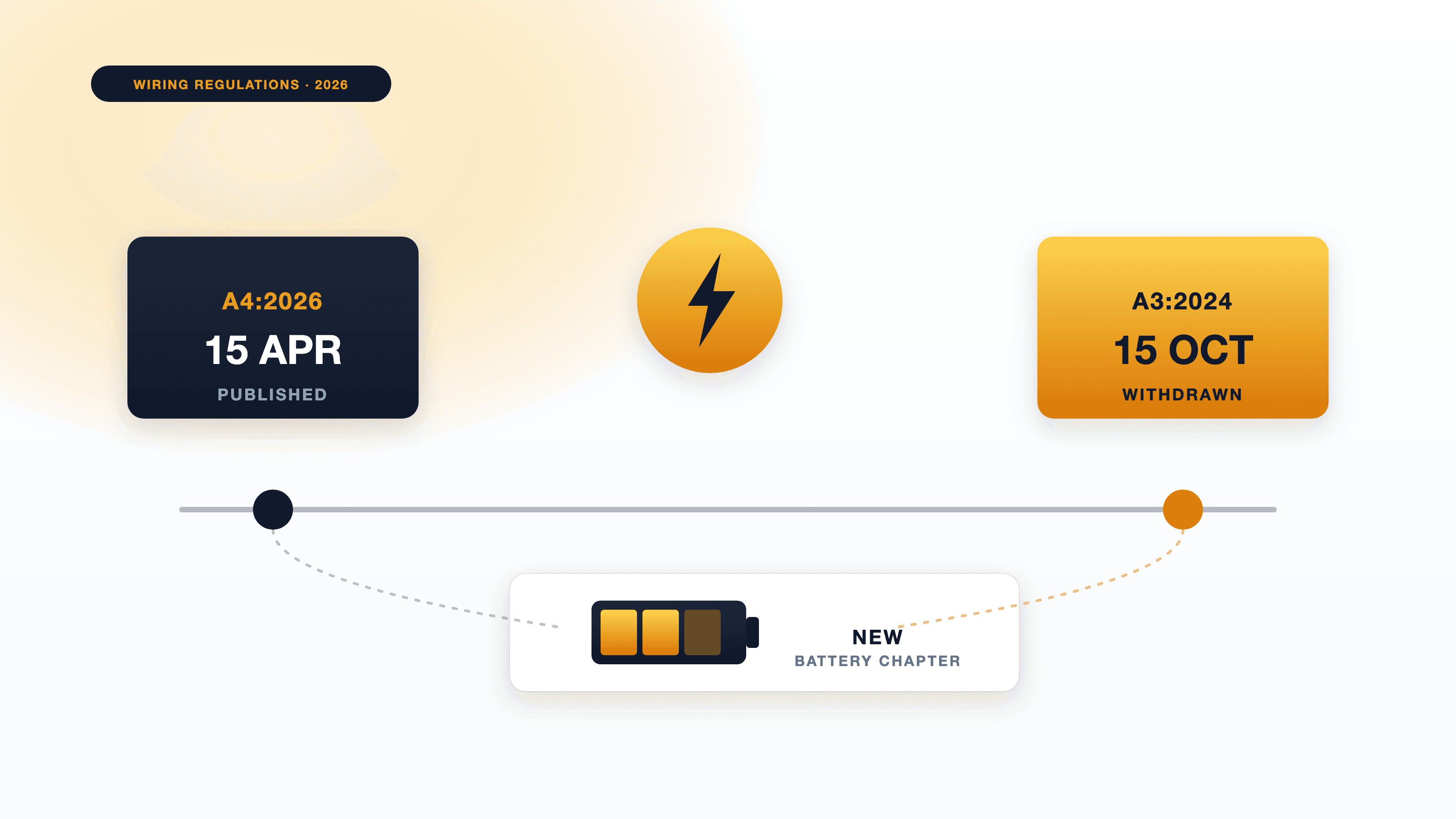
- Siting: follow the placement rules in BS 7671 Amendment 4, which restricts where batteries can go in the home.
If you are comparing Tesla models, our Powerwall 2 vs Powerwall 3 comparison and Powerwall 3 review cover the differences. The Powerwall 3 is a different product and is not named in the OPSS notice.
Check your home insurance and records
Keep the emails, app notifications and installer correspondence about the replacement, and tell your home insurer if it asks about changes to your battery. Because the unit may be discharged or offline in the meantime, also check any smart tariff or export arrangement you rely on the battery for.
FAQs
Is the Tesla Powerwall 2 being recalled in the UK?
How do I know if my Powerwall 2 is affected?
Why is the Tesla Powerwall 2 a fire risk?
Does the OPSS warning affect the Tesla Powerwall 3?
Sources — verified 15 October 2026
- GOV.UK (OPSS), “Product Safety Report: Tesla Powerwall 2 (PSD ref. 2609-0219)” — www.gov.uk
- The Irish Times / PA, “Safety warning issued over Tesla battery system 'which presents a risk of fire'” — www.irishtimes.com
- Solar Power World, “10,500 Tesla Powerwall 2 batteries recalled due to fire risk” — www.solarpowerworldonline.com
- Tesla, “Powerwall system alerts and notifications” — www.tesla.com

About the author
Sepehr
Solar specialist & co-founder, Smart Solar Homes
Solar specialist and co-founder of Smart Solar Homes, which works with MCS-certified UK installer partners. I write all the guides and reviews here; the aim is straight-talking education the industry rarely provides.
Citing this page? Please use a dofollow link back to the original article — it helps us keep the data on this page accurate and up to date.
Browse Battery Storage on Smart Solar Homes


Want to compare these side by side? Use the compare tool →
Or browse all Battery Storage on Smart Solar Homes.
Related reading
More on battery storage from the editorial team.
Find installers near you
MCS-certified solar installers covering these areas.