Forced Labour in Solar Panels: GB Energy and the SSI
Written and reviewed by Sepehr. See our editorial policy.
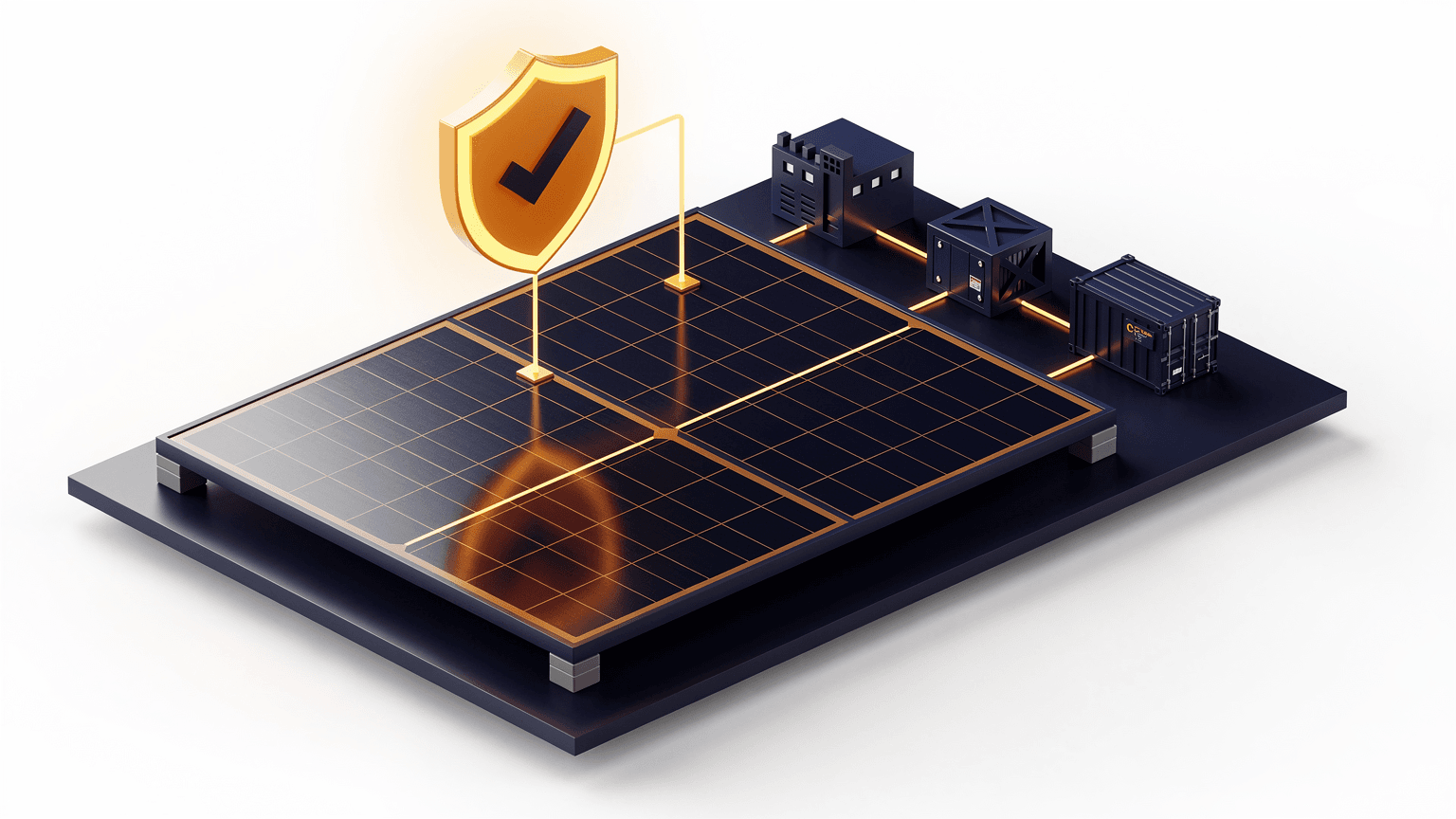
On 8 October 2026 Great British Energy (GB Energy) restated that it is working with the Solar Stewardship Initiative to keep solar panels made with forced labour out of the projects it funds. It is the clearest UK government step so far on forced labour in solar supply chains, and if you're buying panels for your own roof you may wonder whether it applies to you. Short answer: not directly, but it's a useful lens for judging a quote.
What GB Energy announced
According to Solar Power Portal, suppliers seeking support from GB Energy's £20 million Community Fund must use manufacturers that are members of the Solar Stewardship Initiative (SSI), or show equivalent environmental, social and governance (ESG) assurance. The update followed a request for information from Lord Alton, chair of the Joint Committee on Human Rights, with GB Energy's chief executive replying in August and pointing to an internal Ethical Supply Chains Unit.
The rule has a legal root. An amendment to the Great British Energy Bill in April 2025 barred GB Energy projects from using solar products linked to forced labour, as Solar Power Portal reported at the time. Energy Secretary Ed Miliband said GB Energy could use modules from companies “independently certified as not using slave labour under the initiative of the solar industry”.
What the Solar Stewardship Initiative is
The SSI was launched in 2022 by SolarPower Europe and Solar Energy UK as a supply-chain assurance scheme. Per pv magazine, members must have two operational sites assessed against its ESG Standard by an accredited certification body such as TÜV Rheinland within 12 months of joining. The standard has 96 criteria, 52 of them on human and labour rights. At the time of that report its registry listed 14 certified sites across manufacturers including Astronergy, Canadian Solar, DMEGC, JA Solar, Jinko, Risen and Trina Solar. The registry changes, so check the SSI site for the current list.
The limits of the scheme
It is voluntary and industry-led, and it has critics. The European Solar Manufacturing Council advised its members not to join, arguing voluntary schemes cannot replace legislation and that certifying selected facilities leaves a company's other sites outside scope. The Coalition to End Forced Labour in the Uyghur Region has argued that SSI certification should not be treated as reliable proof of forced-labour compliance. The SSI's own standard says certification is not possible in regions where unsupervised assessment is not available, and raw-material tracing (polysilicon especially) remains hard. The IEA found China holds over 80% of every key manufacturing stage of the solar supply chain, so the issue touches most panels sold worldwide.
Does it affect your home install?
Not as a legal requirement. The rule applies to projects supported by GB Energy, and the report doesn't say it extends to ordinary domestic installations. Nothing announced changes MCS rules, your warranty or the price of a standard quote.
If supply-chain ethics matters to you, you can still act on it:
- Ask the installer which panel brand is quoted and whether the manufacturer is an SSI member or has certified sites. Our questions to ask a solar installer list is a good place to add this one.
- Compare brands, not just price. See solar panel manufacturers for where major brands are made, and how to compare solar quotes.
- Weigh it alongside warranty strength. A brand's financial standing matters if you ever need a claim; see solar panel warranties.
For the wider policy picture, our GB Energy guide explains what the state-owned company does for households.
Bottom line: GB Energy's stance is a policy signal rather than a rule for your rooftop. SSI membership is one useful data point, not a guarantee, so treat it as a reason to ask your installer questions rather than a pass/fail test.
FAQs
Are solar panels made with forced labour banned in the UK?
What is the Solar Stewardship Initiative?
Does the SSI guarantee panels are free of forced labour?
How can I check where my solar panels come from?
Sources — verified 13 October 2026
- Solar Power Portal, “Great British Energy continues Solar Stewardship Initiative work” — www.solarpowerportal.co.uk
- Solar Power Portal, “GB Energy likely to use solar industry scheme for forced labour ban” — www.solarpowerportal.co.uk
- pv magazine, “Solar Stewardship Initiative publishes guide for solar supply chain” — www.pv-magazine.com
- European Solar Manufacturing Council, “Non-recommendation of the Solar Stewardship Initiative” — esmc.solar
- IEA, “Solar PV Global Supply Chains: executive summary” — www.iea.org

About the author
Sepehr
Solar specialist & co-founder, Smart Solar Homes
Solar specialist and co-founder of Smart Solar Homes, which works with MCS-certified UK installer partners. I write all the guides and reviews here; the aim is straight-talking education the industry rarely provides.
Citing this page? Please use a dofollow link back to the original article — it helps us keep the data on this page accurate and up to date.
Browse Battery Storage on Smart Solar Homes


Want to compare these side by side? Use the compare tool →
Or browse all Battery Storage on Smart Solar Homes.
Related reading
More on battery storage from the editorial team.
Find installers near you
MCS-certified solar installers covering these areas.