AuroraCell Sodium-Ion Battery: 20,000 Cycles, UK Verdict
Written and reviewed by Sepehr. See our editorial policy.
A Bulgarian manufacturer has launched what it calls a sodium-ion home battery with a claimed 20,000-cycle life and a 20-year warranty. The AuroraCell 9.7 kWh unit, announced on 7 October 2026, is the biggest headline spec yet for the chemistry — but there is no UK price or availability date, and every performance figure so far comes from the manufacturer. Here is what has been announced, what is unproven, and what UK buyers should do with it.
What AuroraCell has announced
According to pv magazine's report, the AuroraCell is a 48 V residential battery with a rated energy of 9.744 kWh (210 Ah nominal capacity). Its cathode uses a sodium chromium oxide (NCO) chemistry rather than the lithium iron phosphate (LFP) cells found in almost every battery sold in the UK today.
The published figures are:
- Cycle life: 20,000 cycles at 100% depth of discharge at 25°C (manufacturer claim).
- Warranty: 20 years.
- Temperature range: discharge from −40°C to 60°C; charging from 0°C to 60°C.
- Power: 0.5C charge and discharge, with a 150 A maximum discharge current.
- Enclosure: IP65, 483 × 254 × 754 mm, and 110.5 kg.
- Certifications listed: UL9540A, UN38.3, MSDS and CE.
- Compatibility: a long list of inverter brands, including Victron, Deye, Solis, Growatt, SMA, Sungrow and Schneider, with units connectable in parallel for more capacity.
The report gives no price and no launch date for any market.
Why 20,000 cycles is a big claim
LFP rivals quote far lower figures: Hinen, for example, quotes more than 8,000 cycles for its A15 (see our Hinen A15 review). Even cycling once a day, 20,000 cycles would be more than 50 years of use, which is longer than a 20-year warranty can ever test. In practice the 20-year warranty is the more meaningful number: a typical home battery cycles around once a day, so it covers roughly 7,300 cycles.
That matters because battery lifespan is one of the biggest unknowns when you buy. Our guide to how long solar batteries last explains why warranty terms (throughput limits, end-of-life capacity) matter more than headline cycle counts.
The catch for UK homes: 110 kg and the new location rules
At 110.5 kg, the AuroraCell is a floor-standing unit, not something you hang on a plasterboard wall. It also lands just as the UK's battery location rules tighten: BS 7671 Amendment 4 restricts where new domestic batteries can go, with the requirements becoming mandatory for new installs from 15 October 2026 (IET). Our explainer on the home battery loft ban covers what is allowed. A heavy unit like this would realistically need a garage, utility room or outbuilding with a solid floor.
Is a sodium-ion battery worth waiting for?
Not yet, for most households. Sodium-ion's pitch is a longer life, better cold-weather performance and no lithium or cobalt, but the AuroraCell has no UK listing, no independent test data and no UK installer track record. Our sodium-ion batteries UK guide covers the small number of UK-available options, such as Eleven Energy's Galvani, and the wider state of the market.
If you want storage now, the economics of a proven LFP battery are strong enough that waiting for a possibly cheaper chemistry usually costs more in lost savings than it gains. Work through how a home battery installation works and compare options in our best home batteries guide.
A second sodium-ion story: grid-charging batteries for flats
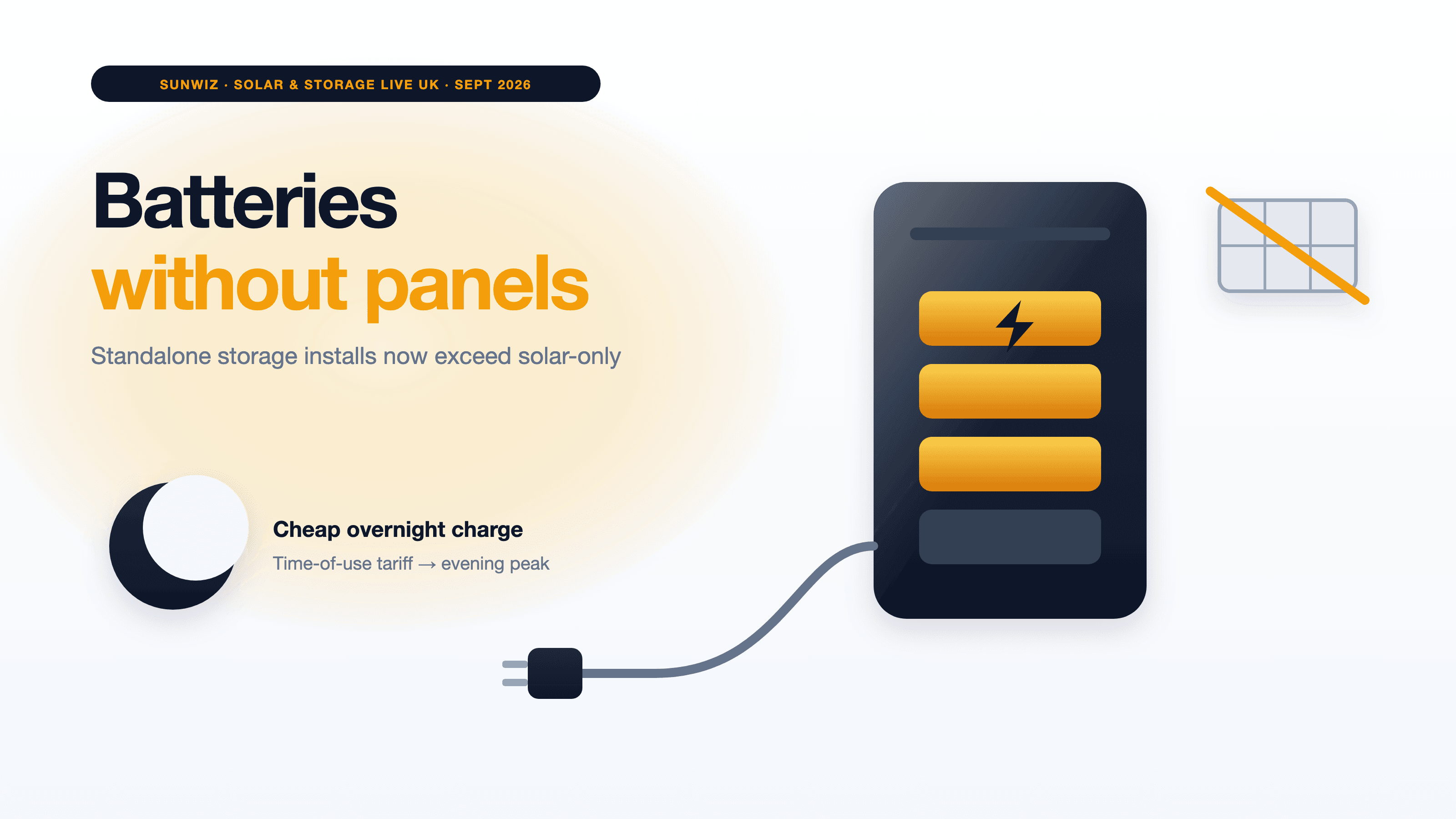
A few days earlier, German start-up Revolta won grant funding to develop a plug-and-play sodium-ion battery that charges directly from the grid and targets households without solar panels, such as small rented flats. The ERDF-backed project runs from August 2026 to the end of 2029, and the company has disclosed no capacity, price or launch date. It is a German project, but it shows where sodium-ion is heading: cheaper chemistry for homes that cannot fit a roof array.
What to check if a sodium-ion battery does reach the UK
- Warranty terms: what capacity is guaranteed at year 20, and is there a throughput limit?
- Inverter compatibility: a brand appearing on a list is not the same as a tested, supported integration.
- Installer support: a battery is typically installed by an MCS-certified installer, and the installer needs to be willing to fit and service it.
- Fire safety and location: check compliance with BS 7671 Amendment 4 and PAS 63100 for where it can go.
FAQs
What is the AuroraCell sodium-ion battery?
Can you buy a sodium-ion home battery in the UK?
How heavy is the AuroraCell 9.7 kWh battery?
Should I wait for sodium-ion batteries before buying a home battery?
Sources — verified 7 October 2026
- pv magazine, “AuroraCell launches 9.7 kWh sodium-ion chromium oxide residential battery” — www.pv-magazine.com
- pv magazine, “German startup wins grant for grid-charging sodium-ion home battery” — www.pv-magazine.com
- IET, “IET & BSI officially publish Amendment 4 (2026) to BS 7671:2018” — www.theiet.org
- Eleven Energy, “Galvani sodium-ion battery” — www.elevenenergy.co.uk
- MCS, “Battery storage” — mcscertified.com

About the author
Sepehr
Solar specialist & co-founder, Smart Solar Homes
Solar specialist and co-founder of Smart Solar Homes, which works with MCS-certified UK installer partners. I write all the guides and reviews here; the aim is straight-talking education the industry rarely provides.
Citing this page? Please use a dofollow link back to the original article — it helps us keep the data on this page accurate and up to date.
Browse Battery Storage on Smart Solar Homes


Want to compare these side by side? Use the compare tool →
Or browse all Battery Storage on Smart Solar Homes.
Related reading
More on battery storage from the editorial team.
Find installers near you
MCS-certified solar installers covering these areas.