Solar Panels During a Renovation: When to Add Them & What Changes

Written and reviewed by Sepehr. See our editorial policy.
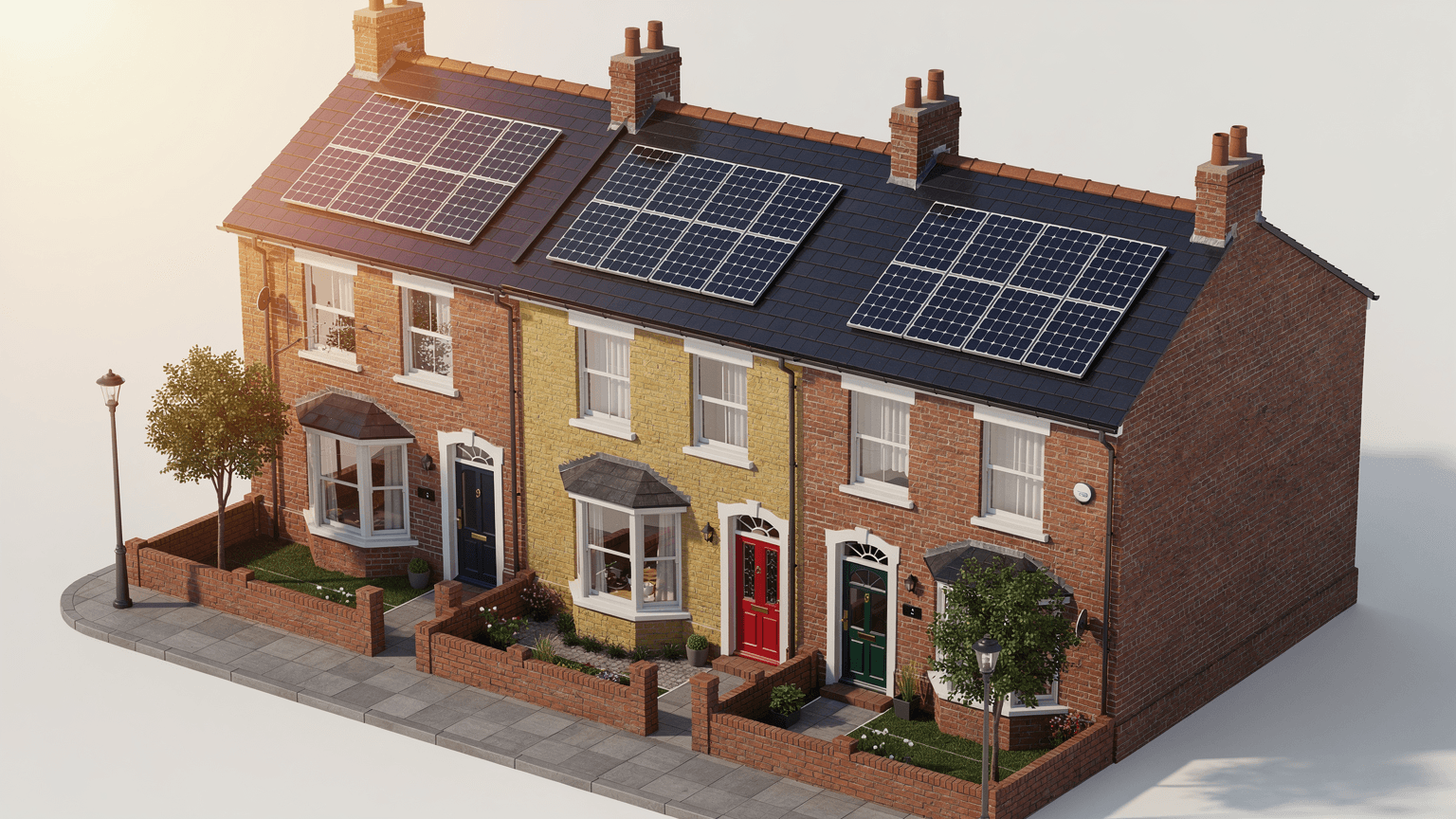
A loft conversion, rear extension, or full re-roof already means scaffolding, an open roof, and a structural engineer on speed dial. That overlap is the single biggest reason to think about solar at the same time rather than as a separate project a few years later: the most expensive part of a domestic solar installation isn't the panels, it's the access. Here's how to plan solar into a renovation you're already doing, and what changes about planning, VAT, and warranties when the two jobs run together.
Why renovation timing saves money
Scaffolding and roof access are the largest non-hardware cost in a typical solar installation. Domestic scaffold hire commonly runs £600–£1,500 depending on the property, and that cost is paid whether the crew is up there for solar, for a re-roof, or for a loft dormer. If scaffolding is already erected for building work, a solar installer can often use the existing platform for a reduced additional charge rather than a full separate hire — ask your builder to include the solar installer in the scaffold licence period before it comes down.
The same logic applies to re-roofing specifically. If your existing roof covering has ten years or less of expected life left, fitting solar to it now means paying to remove the whole array, re-roof, and refit it again partway through the panels' 25+ year lifespan. Doing the roof and the solar together is one mobilisation, one set of scaffolding, and roofing and PV systems designed to reach the end of their service life together.
Loft conversions and rear extensions change your roof
A loft conversion often adds dormer windows or alters roof pitch; a rear extension can add a new flat or pitched roof plane with a different orientation to the original house. Both change the calculation of where panels get the most sun. Get your solar survey after the extension drawings are finalised, not before — an installer sizing a system against the current roof may recommend a different layout once a new south-facing dormer or extension roof is added. See our guide to which roof type suits solar best for how pitch, orientation, and shading affect output.
Planning permission: renovation doesn't reset your solar rights
A separate extension or loft conversion doesn't change whether roof-mounted solar itself needs planning permission. Most homes retain permitted development (PD) rights for solar under the GPDO 2015, provided panels don't protrude more than 0.2 metres from the roof slope and don't sit higher than the highest part of the roof. See our full solar panel planning permission guide for the exact conditions.
Two situations catch renovating homeowners out. First, if your renovation is itself large enough to need full planning permission (rather than PD), it's worth asking the planning officer to confirm solar PD rights explicitly in writing, since some local authorities attach an Article 4 Direction removing PD rights in specific streets or conservation areas. Second, listed buildings have no PD rights for solar at all, renovation or not — both listed building consent and standard planning permission are required regardless of what else you're doing to the property. Our guide to solar panels on listed buildings covers the consent process in full.
VAT: one invoice matters more than the size of the job
Solar panels installed as part of a qualifying supply-and-install contract benefit from 0% VAT until 31 March 2027 under HMRC VAT Notice 708/6 (reverting to 5% from 1 April 2027). General building work — the extension shell, the loft conversion joinery, the re-roof itself — is standard-rated at 20% unless it separately qualifies as new dwelling construction. The two don't automatically combine: to get the 0% rate on the solar element, the same contractor needs to supply and fit the panels under a contract that's distinct enough for HMRC to recognise it as an energy-saving materials installation, not just materials bought and self-fitted as part of the wider build. Ask your main contractor or a specialist solar installer to quote the PV work as a discrete supply-and-fit line, and keep the invoices separated for your records.
Structural checks and roof warranty rules
Whoever is doing your structural calculations for the extension or loft conversion should be told solar is planned, even if it's a separate installer doing the fitting later. Panels add a modest but real dead load, and wind and snow loading rules still apply per building regulations guidance regardless of whether the roof is new or existing.
If any part of the roof is new construction, NHBC standard 7.2.26 applies to how integrated solar panels interact with the roof covering: penetrations must be detailed with proprietary flashing kits to maintain weathertightness, and where an array is fitted the roof covering is treated as air-impermeable and must be ventilated accordingly unless the panel manufacturer proves otherwise. If your renovation is covered by an NHBC or other structural warranty, confirm with the warranty provider before the roof is closed up, not after.
One nuance worth knowing: the Future Homes Standard's new Requirement L3 — which mandates on-site renewable electricity generation equivalent to roughly 40% of ground floor area — applies to new dwellings being erected from 24 March 2027, not to extensions of an existing house. A loft conversion or rear extension on your current home doesn't trigger this requirement on its own, though if your project creates a genuinely new, separately habitable dwelling, it's worth checking with your building control body whether L3 applies to that unit.
Wire for the future while the walls are open
A renovation is the cheapest point to run conduit and cable routes you'll want later, even if you're not installing a battery or EV charger yet. Ask your electrician to route spare ducting from the loft or roof space down to the consumer unit location, and from the consumer unit out to wherever a future EV charger might sit. Retrofitting this after plastering and flooring are finished costs far more in remedial work than adding it during a first-fix stage. Our guides to home battery storage and EV charger installation cover what space and wiring each needs.
Financing: one mortgage conversation, not two
If you're taking out a further advance or renovation loan to fund the extension, it's worth asking your lender in the same conversation whether solar qualifies for a green mortgage rate or cashback, since several major UK lenders offer discounted rates specifically for homes installing solar or achieving an EPC uplift. Combining the ask avoids a second credit search and paperwork round a few months later. See our green mortgage and solar panels guide for current lender offers.
A practical sequencing checklist
- Get your solar survey once extension or loft drawings are finalised, not before — roof shape and orientation may change.
- If your existing roof covering has under ten years of life left, re-roof and fit solar in the same mobilisation.
- Ask your builder to keep scaffolding up for the solar installer's slot, or coordinate a shared hire period.
- Confirm PD rights in writing if your renovation needs full planning permission, or if you're in a conservation area or Article 4 zone.
- Get the solar element quoted as a distinct supply-and-fit contract to secure 0% VAT.
- Tell your structural engineer and (if applicable) NHBC warranty provider that solar is planned before the roof is closed up.
- Run spare conduit for a future battery or EV charger while walls and floors are open.
- Ask your mortgage lender about green mortgage rates in the same conversation as your renovation finance.
FAQs
Is it cheaper to install solar panels during a renovation?
Do I need planning permission for solar panels if I'm extending my house?
Can I get 0% VAT on solar panels installed during a renovation?
Should I replace my roof before or after fitting solar panels?
Sources — verified 6 July 2026
- GOV.UK / HMRC, “VAT on energy-saving materials and heating equipment (Notice 708/6)” — www.gov.uk
- legislation.gov.uk, “Town and Country Planning (General Permitted Development) (England) Order 2015 — Schedule 2, Part 14” — www.legislation.gov.uk
- GOV.UK, “Permitted development rights for householders: technical guidance” — www.gov.uk
- NHBC, “Guide to installation of renewable energy systems on roofs of residential buildings” — www.nhbc.co.uk
- GOV.UK, “Approved Document L: Conservation of fuel and power (2026 edition)” — assets.publishing.service.gov.uk
- GOV.UK, “The Future Homes and Buildings Standards: Building Circular 01/2026” — www.gov.uk

About the author
Sepehr
Solar specialist & co-founder, Smart Solar Homes
Solar specialist and co-founder of Smart Solar Homes, which works with MCS-certified UK installer partners. I write all the guides and reviews here; the aim is straight-talking education the industry rarely provides.
Citing this page? Please use a dofollow link back to the original article — it helps us keep the data on this page accurate and up to date.
Browse Solar Panels on Smart Solar Homes


Want to compare these side by side? Use the compare tool →
Or browse all Solar Panels on Smart Solar Homes.
Related reading
More on solar panels from the editorial team.

Find installers near you
MCS-certified solar installers covering these areas.