Plug-In Solar Safety: Is Your Home's Wiring Ready?

Written and reviewed by Sepehr. See our editorial policy.
Plug-in solar panels became legal to buy and self-install in the UK on 27 August 2026, and retailers including Argos moved quickly to put compliant kits on shelves. But in the same weeks as that launch, the electrical industry's own safety bodies have been warning that not every home is actually ready for one. Before you plug a solar panel into a wall socket, it's worth understanding why — and what to check first. For the legal framework itself, see our guide to plug-in and balcony solar rules in the UK.
What the electrical bodies actually warned
On 8 June 2026, five electrical industry bodies — the Electrical Contractors' Association (ECA), Electrical Safety First, the Institution of Engineering and Technology (IET), NICEIC and SELECT — issued a joint statement urging caution ahead of the rollout. Their central concern: plug-in solar introduces electricity flowing back into a home's wiring, something most UK consumer units and protective devices were never designed to handle. The bodies said it “remains unclear how plug-in solar panels will interact with the millions of existing electrical installations in UK homes, particularly in older properties where this wiring may have deteriorated,” and separately noted that a large proportion of UK housing stock is over a century old, with wiring in some of those homes potentially unfit to carry extra load.
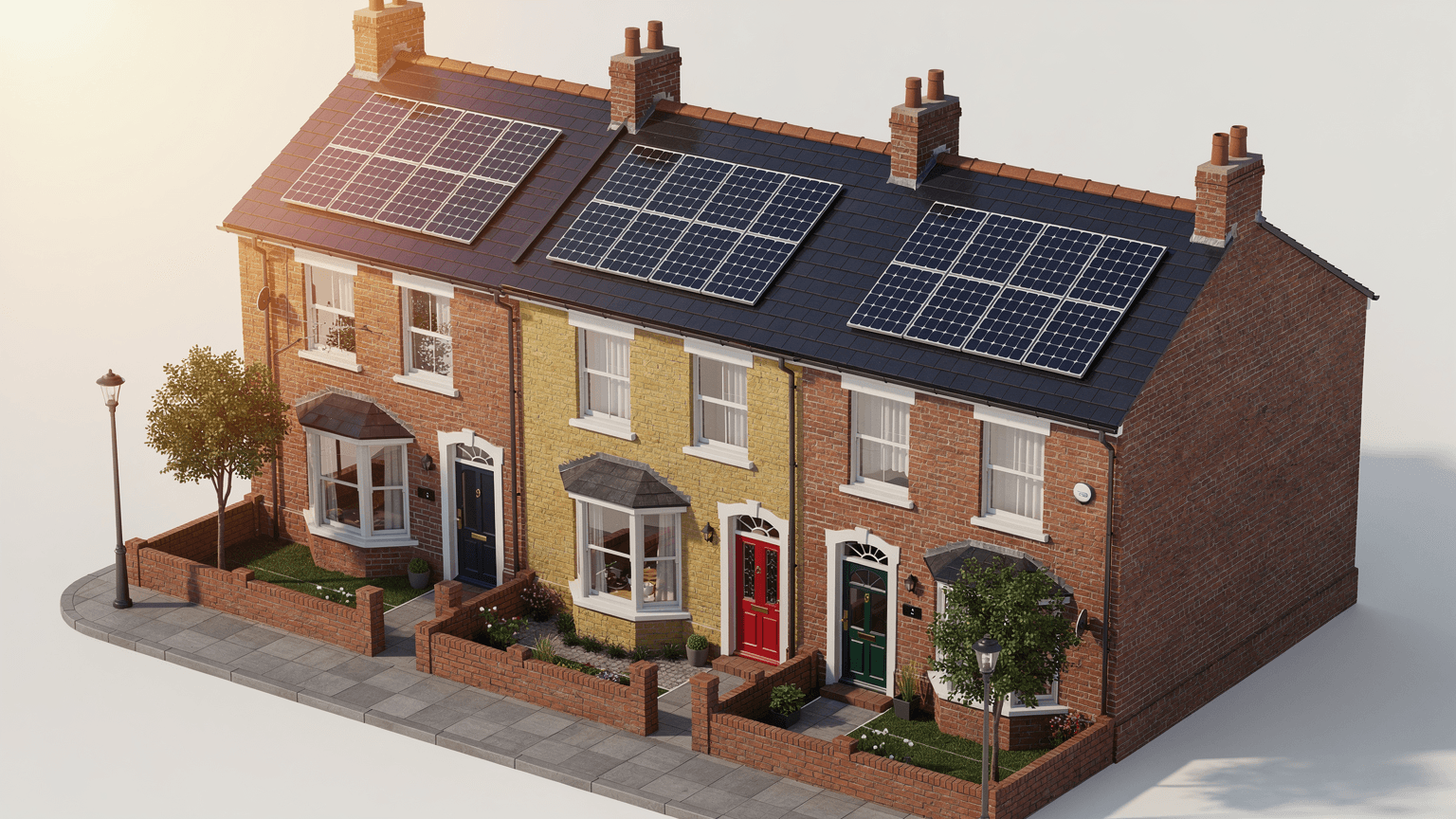
That statement should be read as the trade bodies' own characterisation of housing age, not an independently audited figure — England's official housing stock data (the English Housing Survey) puts homes built before 1919 at around a fifth of the total stock, concentrated more heavily in the private rented sector. Either way, the practical point stands: a meaningful share of UK homes have wiring and protective devices that predate any consideration of solar generation flowing back through a domestic socket, and age alone isn't a reliable way to know if yours is one of them.
The bodies called for “clear product standards, robust enforcement, competent installation pathways, appropriate consumer guidance” and network protection safeguards before a full-scale rollout — measures the government has since partly addressed through the Interim Product Specification and DESNZ's July 2026 consultation response, but which don't remove the need for a household to check its own wiring.
Why bidirectional power flow is the core issue
Most UK homes were wired to carry electricity in one direction only — from the socket outlet to whatever appliance you've plugged in. A plug-in solar panel reverses part of that: while it's generating, current can flow from the panel back through the socket and into the circuit. Electrical Safety First's August 2026 consumer guidance explains that this bidirectional flow can produce an element of DC residual current, and that many Residual Current Devices (RCDs) — the safety devices in a consumer unit designed to cut power in a fault — were never tested to operate correctly under those conditions. In the worst case, an incompatible RCD can be desensitised by DC residual current and fail to trip when it should.
Check your RCD type before you buy anything
Electrical Safety First's guidance sets out the check in plain terms. RCDs and RCBOs (which combine an RCD with a circuit breaker) come in different “types,” usually marked with a small symbol on the front of the device:
- Type AC — not designed or tested for any level of DC residual current. Unsuitable for plug-in solar.
- Type A — tested to tolerate moderate DC residual current (above 6mA). Suitable for plug-in solar on the circuits it protects.
- Type B or Type F — tested to tolerate a wider range of DC residual current. Suitable for plug-in solar.
Even if your RCD is a suitable type, it also needs to be confirmed as bidirectionally capable — a separate check that Electrical Safety First says “few RCDs/RCBOs can be easily identified” as meeting, by sight alone. Some manufacturers mark bidirectional-capable devices with a ‘BD’ or ‘Bi-dir’ suffix on the model number, but not consistently. If you can't confirm this from the markings, Electrical Safety First's advice is to note the make and model from the front of the device and contact the manufacturer, or ask a competent electrician registered with a Competent Person Scheme to assess it — and never to remove the consumer unit cover or touch the wiring yourself to look.
If your home still has rewirable or cartridge fuses rather than RCDs, the fuses themselves won't be affected by adding a plug-in solar panel — but you also won't have the shock-protection benefit that a modern RCD provides, which is exactly the protection this whole check is about. Electrical Safety First recommends an inspection by a competent electrician before installing plug-in solar in that case too, particularly where the consumer unit is unlabelled or of unknown condition.
What to avoid doing
Beyond the RCD check, Electrical Safety First's consumer guidance is explicit that a plug-in solar panel should never be connected via extension leads, cable reels, multiway adaptors, travel adaptors, RCD adaptors, lighting circuits, or circuits that supply fixed equipment such as an oven or hob. These accessories and circuit types weren't designed for the load or the reverse power flow a solar panel introduces, and using them raises the risk of overheating. Cables should also be routed so they don't create a trip hazard and aren't run through doorways or gaps they weren't designed for.
The same body's advice on plug-in battery storage add-ons is more blunt: don't install one. Plug-in battery systems aren't currently permitted to be connected to a grid-tied electrical installation, and Electrical Safety First's position, as of its August 2026 guidance, is simply not to fit one in your home even though they are already available to buy from online retailers.
Confirm the product itself is compliant
A compliant kit must state that it meets the government's Interim Product Specification and be registered on the Energy Networks Association's ‘Connect Direct’ register, which lets you check a specific model number against the list of devices verified as safe to connect to the network. The specification also caps a single household to one plug-in solar system up to 800W of AC output; if the total DC rating of the panels supplied exceeds 960W (for example, two 480W-plus panels), Electrical Safety First says manufacturers must advise buyers to get a professional assessment of their existing electrics before installing, regardless of the RCD check above.
Buy from a reputable retailer rather than an unfamiliar online marketplace listing — online marketplaces aren't legally responsible for the safety of third-party goods sold through their sites, which makes it harder to be sure an imported kit actually meets the UK specification. You'll also still need to notify your Distribution Network Operator (DNO) before connecting, under the standard G98 fit-and-notify process that applies to small-scale generation.
Ten questions to answer before you buy
Electrical Safety First's consumer guide condenses the checks into a pre-purchase checklist. Before buying a plug-in solar kit, you should be able to answer:
- Is my electrical installation in good condition, and when was it last inspected?
- Is the specific circuit I intend to use suitable for plug-in solar?
- Are my protective devices (RCD/RCBO) a type that tolerates DC residual current?
- Are those same devices confirmed as bidirectionally capable?
- Does the kit clearly state it meets the Interim Product Specification and appear on the ENA Connect Direct register?
- Am I buying from a reputable supplier that can demonstrate UK compliance, with clear documentation and after-sales support?
- Do I know where the panel will be mounted and how it will be safely fixed?
- Do I understand the DNO notification, and any lease, landlord or insurance implications?
If you can't confidently answer the wiring-related questions, Electrical Safety First's recommendation is straightforward: get your installation checked by a competent electrician registered with a Competent Person Scheme before you buy, not after. For the full cost-versus-savings picture once you've confirmed your home is suitable, see our plug-in solar guide, and for how the wider network handles a street full of new plug-in systems, see our piece on plug-in solar and grid capacity.
FAQs
Is plug-in solar safe for older UK homes?
How do I know if my RCD is the right type for plug-in solar?
Can I use an extension lead with a plug-in solar panel?
Do I need an electrician to install a plug-in solar panel?
Sources — verified 29 August 2026
- Electrical Safety First, “Plug-In Solar Panels: What to Know Before Buying (Consumer Guidance, August 2026)” — www.electricalsafetyfirst.org.uk
- ECA, “Joint statement from ECA, Electrical Safety First, IET, NICEIC and SELECT on plug-in solar panels” — www.eca.co.uk
- GOV.UK, “Plug-in solar: government response (DESNZ, July 2026)” — www.gov.uk
- GOV.UK, “English Housing Survey — housing stock age profile” — www.gov.uk

About the author
Sepehr
Solar specialist & co-founder, Smart Solar Homes
Solar specialist and co-founder of Smart Solar Homes, which works with MCS-certified UK installer partners. I write all the guides and reviews here; the aim is straight-talking education the industry rarely provides.
Citing this page? Please use a dofollow link back to the original article — it helps us keep the data on this page accurate and up to date.
Browse Solar Panels on Smart Solar Homes


Want to compare these side by side? Use the compare tool →
Or browse all Solar Panels on Smart Solar Homes.
Related reading
More on solar panels from the editorial team.
Find installers near you
MCS-certified solar installers covering these areas.