Are Solar Panels Good for the Environment: The Honest Carbon Maths
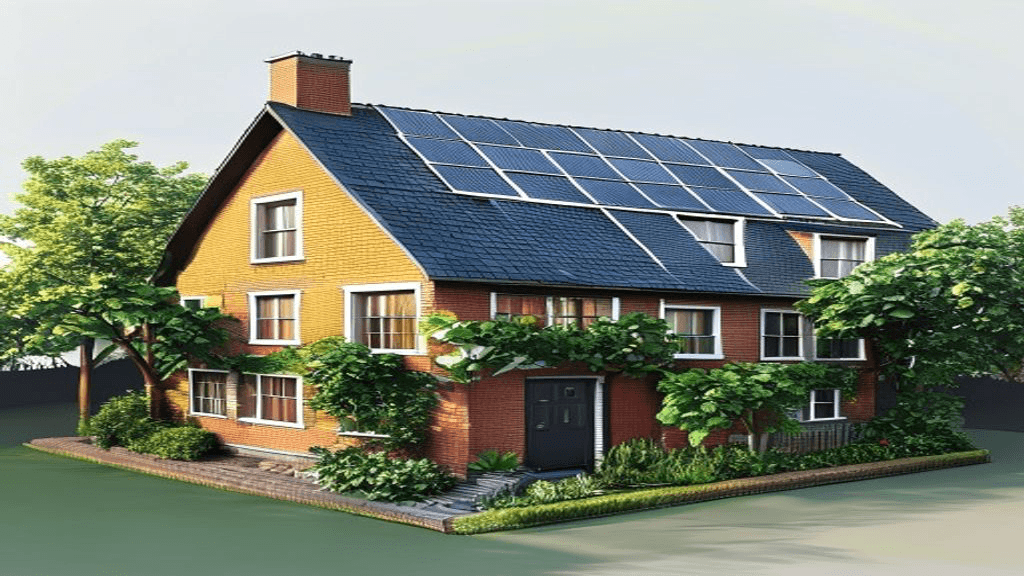
Solar gets sold as a way to “save the planet,” and that framing does it a disservice — because the honest version is more interesting and more useful than the marketing. Yes, solar panels are good for the environment: they pay back the carbon emitted making them in well under three years, then generate low-carbon electricity for a quarter of a century. But “good for the environment” is not the same as “zero carbon,” and a home with solar is not automatically a green home. This guide lays out the actual carbon maths — what panels cost the planet to build, how fast that's repaid, what a kWh of your solar genuinely displaces, where a battery fits in, and the honest limits of what rooftop solar can and can't fix. Every figure here is attributed; you can check the sources at the end.
The carbon cost of making a solar panel
Making solar panels is not carbon-free. Mining quartz, refining it into high-purity silicon, manufacturing cells, and shipping the finished modules all burn energy — much of it, today, in factories running on coal-heavy grids in China. That embodied carbon is real, and it's the strongest honest objection to solar. The question is not whether it exists, but how it compares to what the panel goes on to save.
Measured across its whole life — manufacture, transport, installation, decades of generation, and disposal — a modern monocrystalline panel works out at roughly 40 grams of CO₂ per kWh of electricity it produces. The Intergovernmental Panel on Climate Change (IPCC) puts crystalline-silicon solar at around 41 gCO₂/kWh. That is not zero. But it is roughly 12 times lower than electricity from natural gas and about 20 times lower than coal, on the same whole-life basis. The carbon is paid once, up front; the low-carbon electricity keeps coming for 25–30 years.
Carbon payback: how fast a panel repays its making
The number that matters most is carbon payback time — how long a panel must run before the emissions it avoids equal the emissions it took to build. For a rooftop system in the UK, that's roughly 1.5 to 3 years, and toward the shorter end in the sunnier South East. The closely related energy payback time — how long until a panel generates the energy used to make it — is even shorter, around 1 to 1.25 years for panels installed in Europe, according to the International Energy Agency (IEA).
Put plainly: a panel fitted in 2026 will have repaid its entire carbon debt well before 2030, and then spend two-plus decades generating electricity at a fraction of the grid's carbon. Over a 25-year life, a panel returns many times the carbon it cost. This is the single most important fact in the whole debate, and it's why “but making them pollutes” — while true — doesn't change the conclusion. For the financial version of this same payback logic, see the solar panel payback period guide.
What a kWh of your solar actually displaces
Here's where most carbon claims get lazy, and where the honest answer is genuinely more nuanced. When people calculate solar's savings, they multiply your generation by the average carbon intensity of the grid. In 2024 the UK grid hit a record low of 124 gCO₂/kWh, and it stayed broadly around that level into 2025, according to the National Energy System Operator (NESO). So on an average basis, every kWh you self-generate saves about 124g.
But that average understates what your solar really does. Electricity supply is matched to demand minute by minute, and the last power station switched on to meet demand — the marginal generator — is very often a gas plant running at around 400–490 gCO₂/kWh on a whole-life basis. When your panels generate or export at midday, they let the grid turn that marginal gas plant down. So the real-world carbon you avoid per kWh is often closer to gas intensity than to the grid average. That's the genuinely good news the simple sums miss.
The honest counterweight: this advantage shrinks as Britain decarbonises. NESO is targeting roughly 50 gCO₂/kWh by 2030. As gas leaves the margin and wind and solar increasingly set it, each kWh your roof displaces will avoid less carbon than it does today. Solar is still worth it — but anyone telling you the per-kWh saving is fixed forever is wrong. A typical domestic array currently avoids on the order of a tonne of CO₂ a year; treat that as today's figure, not a permanent one.
Does a battery make you greener? Honestly, only a little
A home battery is mostly a financial and independence product, not a carbon one — and it's important to say so on a site that won't pretend otherwise. A battery has its own embodied carbon: estimates for lithium iron phosphate (LFP) home storage vary widely with chemistry and where it's built, from roughly 50 to over 150 kgCO₂e per kWh of capacity. A 10kWh battery therefore carries somewhere between half a tonne and a tonne-and-a-half of embodied carbon before it stores a single unit.
What does it buy back? A battery lets you use more of your own solar instead of exporting it and importing later, so it shifts clean daytime energy into the evening, displacing grid power at the dirtier end of the day. That's a genuine but modest carbon benefit, and its payback is longer and far less certain than a panel's. LFP chemistry is the lower-carbon, longer-lasting choice and is what virtually every quality home battery now uses. But if your motivation is purely environmental, spend on panels first and more panels second; add a battery for the independence and bill reasons it's actually good at, with the carbon as a small bonus.
The honest limit: solar only fixes part of your footprint
This is the part the “save the planet” pitch quietly skips. Solar panels reduce the carbon of your electricity — and for most UK homes, electricity is the smaller part of the energy footprint. A typical home uses around 2,700kWh of electricity a year, but if it's heated by a gas boiler it also burns 11,000–12,000kWh of gas, which emits roughly two tonnes of CO₂ annually — more than the electricity and the solar saving combined. Add a petrol car, a couple of flights, and everyday consumption, and household electricity is a minority slice of the whole.
None of that diminishes solar; it just sets expectations honestly. Fitting panels is one of the most cost-effective carbon cuts a household can make, but it is a step, not a finish line. The bigger carbon prizes for most homes are electrifying heat and transport — and those interact with solar in ways worth understanding. A heat pump shifts your largest energy demand onto electricity (lower-carbon than burning gas, but peaking in winter when your roof produces least), and an EV charged from your own panels is one of the cleanest miles you can drive. The EV charging with solar guide and the energy independence guide both cover how these pieces fit together.
What “carbon neutral” and “carbon positive” actually mean
These terms are thrown around loosely, so it's worth being precise. Carbon neutral means the net emissions you're responsible for add up to zero. Carbon positive (sometimes “climate positive” or, more rigorously, net-negative) means you remove or displace more carbon than you emit.
Can a solar home get there? On its electricity alone, yes — relatively easily. A well-sized array generates and exports enough low-carbon power that, in carbon terms, it more than offsets the emissions of the electricity the household imports. In that narrow sense a solar home can be electricity-carbon-positive. But whole-home carbon neutrality — covering heating, hot water, and transport too — is a much taller order while you still burn gas to stay warm and petrol to get around. The realistic path is solar first, then heat and transport electrified over time, with the grid getting cleaner underneath all of it. Be wary of any installer who calls a solar-only retrofit “carbon neutral” — that's the kind of loose green claim the UK's advertising rules increasingly clamp down on, and it isn't true.
End of life: what happens to old panels and batteries
A fair environmental verdict has to include the end, not just the beginning. Solar panels are roughly 85–90% recyclable by mass — the aluminium frame, glass, and copper wiring are straightforward to recover, while the bonded cell laminate is harder and is where recycling technology is still maturing. Under the UK's WEEE regulations, panels must be taken back and recycled rather than landfilled, and dedicated PV recycling capacity is growing as the first big wave of installations approaches retirement. Home batteries are likewise recyclable, and a second-life market for used cells is emerging. Neither is a solved problem, but neither is the landfill catastrophe sometimes claimed — and a 25-to-30-year service life means today's panels won't need recycling at scale for years yet.
So — are solar panels good for the environment?
Yes, clearly, on the evidence. They carry a real carbon cost to build, repay it in well under three years, and then generate electricity at a fraction of the carbon of gas or coal for decades. The caveats are about honesty, not doubt: the per-kWh saving will shrink as the grid cleans up, a battery's carbon case is modest, and solar only addresses the electricity slice of your footprint. Understood properly, rooftop solar is one of the highest-impact, fastest-payback environmental decisions a UK household can make — just not the only one worth making.
FAQs
How long do solar panels take to offset the carbon used to make them?
Roughly 1.5 to 3 years for a UK rooftop system, and toward the shorter end in the sunnier South of England. After that, the panel generates low-carbon electricity for another 25-plus years, returning many times the carbon it cost to manufacture.
How much CO₂ does a home solar system save per year?
A typical domestic array currently avoids on the order of a tonne of CO₂ a year. The exact figure depends on system size, how much you generate, and — crucially — what your generation displaces on the grid. Because solar often displaces gas at the margin, the real saving can exceed what the grid-average carbon intensity suggests, though this will fall as Britain's grid decarbonises.
Aren't solar panels made using dirty energy and rare materials?
Much of the world's panel manufacturing happens on coal-heavy grids, which is the main source of their embodied carbon — a genuine downside. But the energy and carbon involved are repaid within one to three years of generation, and panels are mostly made from abundant materials: silicon (from sand), aluminium, glass, and copper, not scarce rare-earth elements.
Does adding a battery make my home greener?
A little, but it's mainly a financial and independence purchase. A battery has its own embodied carbon and delivers only a modest, slow carbon payback by shifting clean solar into the evening. If your goal is purely environmental, prioritise more panels over a battery.
Can a house with solar be carbon neutral?
On its electricity alone, often yes — a good array can displace more carbon than the home's imported electricity emits. But true whole-home carbon neutrality also means tackling heating and transport, which gas boilers and petrol cars still dominate. Solar is a major step toward a low-carbon home, not the whole journey.
Where these numbers come from
Grid carbon intensity figures are from the National Energy System Operator (NESO) and analysis by Carbon Brief; whole-life emissions intensities for solar, gas, and coal are from the IPCC; energy and carbon payback times draw on the International Energy Agency (IEA); and battery embodied-carbon ranges are from published life-cycle assessments of residential lithium iron phosphate storage. Figures are rounded and represent typical values — your own results vary with system size, location, manufacturer, and how Britain's grid changes over time.
Where to go next
If the environmental case has you weighing solar up, the practical next steps are the financial and sizing questions: whether solar is worth it for your home, how many panels you need, and what it all costs and saves. To see how solar, a battery, and the grid combine into a realistic low-carbon, high-independence setup, read the energy independence guide. When you're ready, build a plan for your roof or get quotes from MCS-certified installers.