Octopus Nook Review: the Home Battery Range Launching in 2027

Written and reviewed by Sepehr. See our editorial policy.
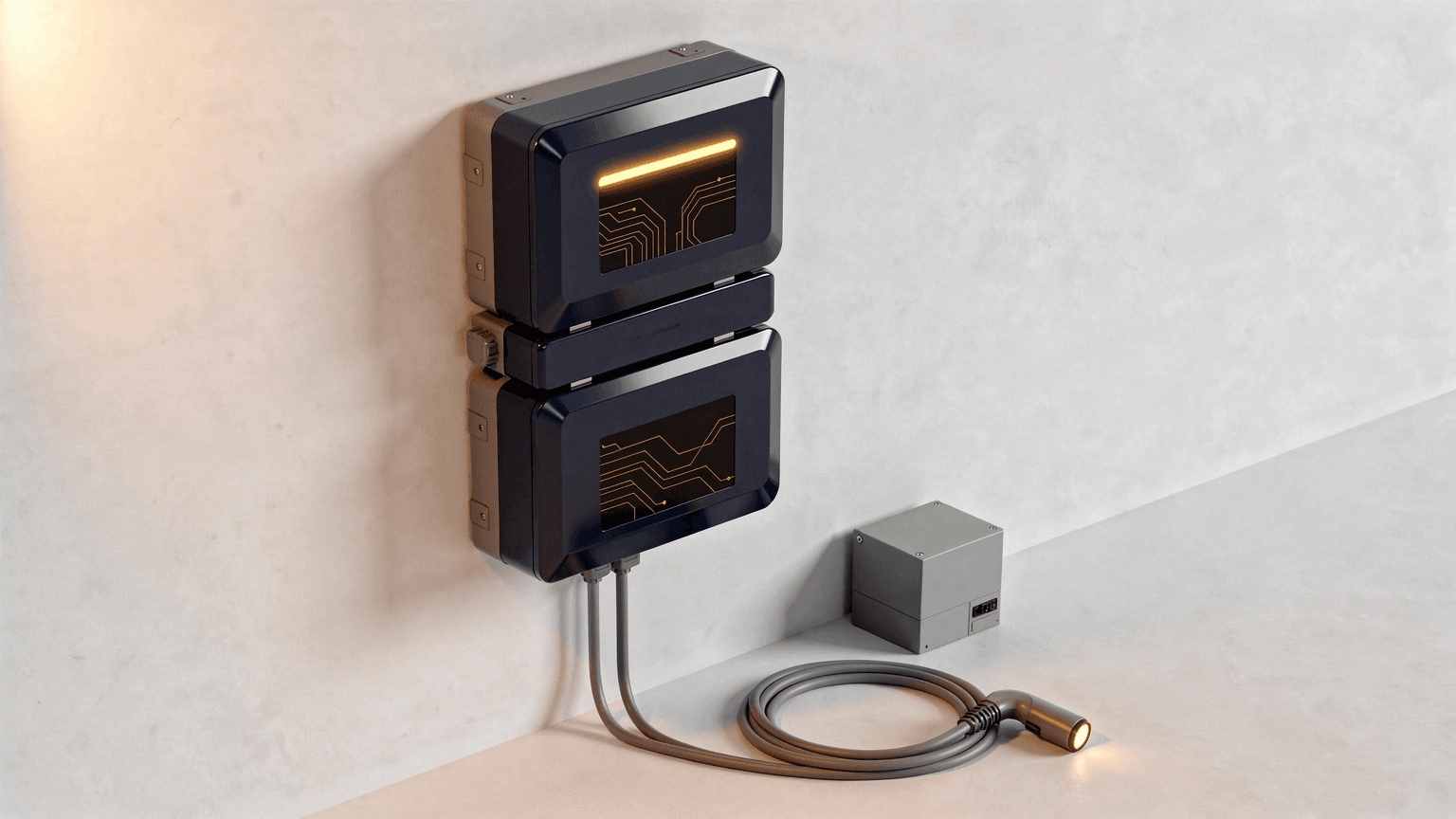
Octopus Energy unveiled its first own-brand home battery range at its Energy Tech Summit on 22 June 2026. The Octopus Nook comes in two models — the plug-in Nook Cube aimed at renters and flat-dwellers, and the wall-mounted Nook Colossus for homeowners. Both go on sale in 2027, exclusively through Octopus Energy, and both integrate directly with the company's Kraken smart tariff platform from day one. Here is what has been confirmed so far, and what to expect when they become available.
What Is the Octopus Nook?
The Nook is Octopus Energy's own-branded home battery storage system. Octopus describes itself as "the first major British energy supplier to launch its own home battery range" — a claim that signals a clear shift from selling third-party batteries (Tesla Powerwall, Fox ESS, Enphase IQ) to manufacturing and distributing a proprietary product.
The strategic logic is vertical integration: Octopus already owns the tariff, the smart charging platform (Kraken), and the installer network. Adding its own hardware closes the loop and, in theory, eliminates the API configuration layer that currently causes smart-charging failures on competitor batteries. Octopus has installed almost 26,000 solar and battery systems across its markets and says its smart tariffs have saved customers almost £1 billion to date.
Nook Cube vs Nook Colossus: Which Is Which?
The two models serve fundamentally different markets:
| Nook Cube | Nook Colossus | |
|---|---|---|
| Form factor | Shoebox-sized, plug-in | Wall-mounted unit |
| Base capacity | 2 kWh per unit | 5 kWh per unit |
| Maximum capacity | 10.5 kWh (5 units) | 30 kWh (stacked) |
| Professional installation | No — plugs into standard wall socket | Yes |
| Solar compatible | Yes (MPPT inputs included) | Yes |
| Warranty | 12 years | 12 years |
| Target user | Renters, flat-dwellers | Homeowners |
| On sale | 2027 | 2027 |
The Cube's plug-in design is the more significant announcement. More than 10 million renting households in Britain have previously been locked out of home battery storage — no mainstream product has offered a no-installation option until now. The Cube plugs into a standard socket, requires no landlord permission for structural work, and can be taken to a new property when you move.
Specs and Warranty
Both models carry a 12-year warranty and include MPPT solar inputs, meaning they can connect to solar panels as well as charge directly from the grid. Battery chemistry has not been officially disclosed by Octopus.
One discrepancy worth noting for the Colossus: the official Octopus press release states the base unit is 5 kWh, while the ETS 2026 live blog referenced a 10 kWh figure. Octopus has not publicly resolved this. The 5 kWh figure from the press release is the more authoritative source until Octopus clarifies ahead of the 2027 launch.
How Much Will the Octopus Nook Cost?
Specific prices have not been announced. CEO Greg Jackson stated the Nook would be “about a third cheaper than the best-known battery brands,” and Octopus's official account described the Colossus as costing “around half the cost of a Tesla Powerwall.” With the Powerwall 3 currently installed at £7,499, that implies a Colossus price in the region of £3,700 — but this is an inference, not a confirmed figure.
For context, Octopus currently charges £4,836 installed for a Fox EVO 10.24 kWh battery and £7,499 for the Tesla Powerwall 3 (both battery-only, 0% VAT). The Nook Colossus would sit competitively in that range if the pricing claim holds.
A payback claim of 2–3 years for the Cube — based on charging from cheap overnight grid electricity alone — was made by Greg Jackson at ETS. This has not been independently modelled and should be treated as indicative until Octopus publishes detailed workings.
Tariff Integration: How Kraken Makes It Work
The structural differentiator of the Nook is its native integration with Octopus Intelligence (Kraken). Both models ship with Kraken built in — no manual scheduling, no third-party app, no API configuration required.
For Octopus customers on Intelligent Octopus Flux, this matters in practice. Flux gives Kraken direct control of the battery to charge during cheap off-peak windows (currently around 15–16p/kWh) and discharge during the fixed 16:00–19:00 peak window (export rate approximately 28p/kWh). On third-party batteries such as the Powerwall 3 or Fox ESS, this integration relies on an API connection that can drop silently — when it does, smart charging simply stops until reconfigured. With the Nook, Octopus owns the firmware and maintains the connection itself.
Both Nook models will also qualify for Saving Sessions (earn Octopoints by discharging during NESO-called demand peaks, typically November to March) and Power Up events (free electricity windows during renewable surplus for grid charging, April to October). In 2025, Octopus customers collectively earned £5.8 million through Saving Sessions and £4.6 million through Power Up sessions.
Does It Work Without Solar?
Yes — both models are designed to work without solar panels. The Nook Cube's pitch to renters is specifically built around off-peak grid charging: charge on a cheap overnight tariff such as Intelligent Octopus Go, use stored power during peak hours. Octopus already offers standalone battery installations of the Fox EVO and Tesla Powerwall 3 on exactly this model, so the commercial approach is proven.
If you do have solar panels, both models include MPPT inputs to connect them directly. Renters who buy a Cube now and later move to a property where they can install panels can integrate solar without replacing the battery unit.
Octopus Nook vs Tesla Powerwall 3 vs Fox ESS
At this stage, the Nook Colossus's headline competitive advantages are price (claimed), Colossus stackability to 30 kWh, and native Kraken integration. Here is how it lines up against the main alternatives Octopus currently sells:
| Nook Colossus | Tesla Powerwall 3 | Fox ESS EVO 10 kWh | |
|---|---|---|---|
| Professional install | Yes | Yes | Yes |
| Warranty | 12 years | 10 years | 10 years |
| Tariff integration | Native Kraken — always on | Via Tesla Fleet API | Via third-party API |
| Approx. installed cost | TBC (~£3,700 implied) | £7,499 | £4,836 |
| Company stability | Low risk | Low risk | Low risk |
Note: GivEnergy, previously one of the most popular smart batteries compatible with Octopus tariffs, entered administration in April 2026. Existing GivEnergy systems continue to operate, but long-term software support and warranty fulfilment are uncertain — it is not recommended for new purchases (full details on what changed). This makes the reliability of native tariff integration a more pressing consideration for new buyers.
For a broader look at whether adding a battery is the right move for your home, see our analysis of whether solar batteries are worth it in the UK.
Is the Octopus Nook Worth Waiting For?
The Nook Colossus will be worth serious consideration once full pricing is confirmed ahead of its 2027 launch, particularly if it undercuts the Powerwall 3 as claimed. The native Kraken integration removes a genuine friction point — API disconnections that silently disable smart charging — that has been a real-world frustration for existing Octopus battery customers.
The Nook Cube is in a category of its own. No mainstream product has offered a plug-in home battery for renters at scale before. If Octopus delivers on the claimed payback and pricing, demand from the UK's 10 million-plus renting households could be substantial.
The honest caveat: this is a pre-launch product with no confirmed pricing, no independent performance data, and a release date more than six months away. If you need a battery now, the Powerwall 3 and Fox EVO are the options Octopus currently installs. If you can wait, the Nook is worth tracking when pre-orders open.
FAQs
When is the Octopus Nook available to buy?
Can I get the Octopus Nook without solar panels?
What is the Octopus Nook Cube capacity?
How much does the Octopus Nook cost?
Sources — verified 23 June 2026
- Octopus Energy, “Octopus Energy launches the Nook range: home batteries to unlock lower bills for millions of households” — octopus.energy
- Octopus Energy, “ETS 2026 live blog” — octopus.energy
- Octopus Energy, “Intelligent Octopus Flux” — octopus.energy
- Octopus Energy, “Battery-only installation” — octopus.energy
- Octopus Energy, “Solar and battery options” — octopus.energy

About the author
Sepehr
Solar specialist & co-founder, Smart Solar Homes
Solar specialist and co-founder of Smart Solar Homes, which works with MCS-certified UK installer partners. I write all the guides and reviews here; the aim is straight-talking education the industry rarely provides.
Citing this page? Please use a dofollow link back to the original article — it helps us keep the data on this page accurate and up to date.
Browse Battery Storage on Smart Solar Homes


Want to compare these side by side? Use the compare tool →
Or browse all Battery Storage on Smart Solar Homes.
Related reading
More on battery storage from the editorial team.
Find installers near you
MCS-certified solar installers covering these areas.