Plug-In Solar Insurance: What You Must Tell Your Insurer
Written and reviewed by Sepehr. See our editorial policy.
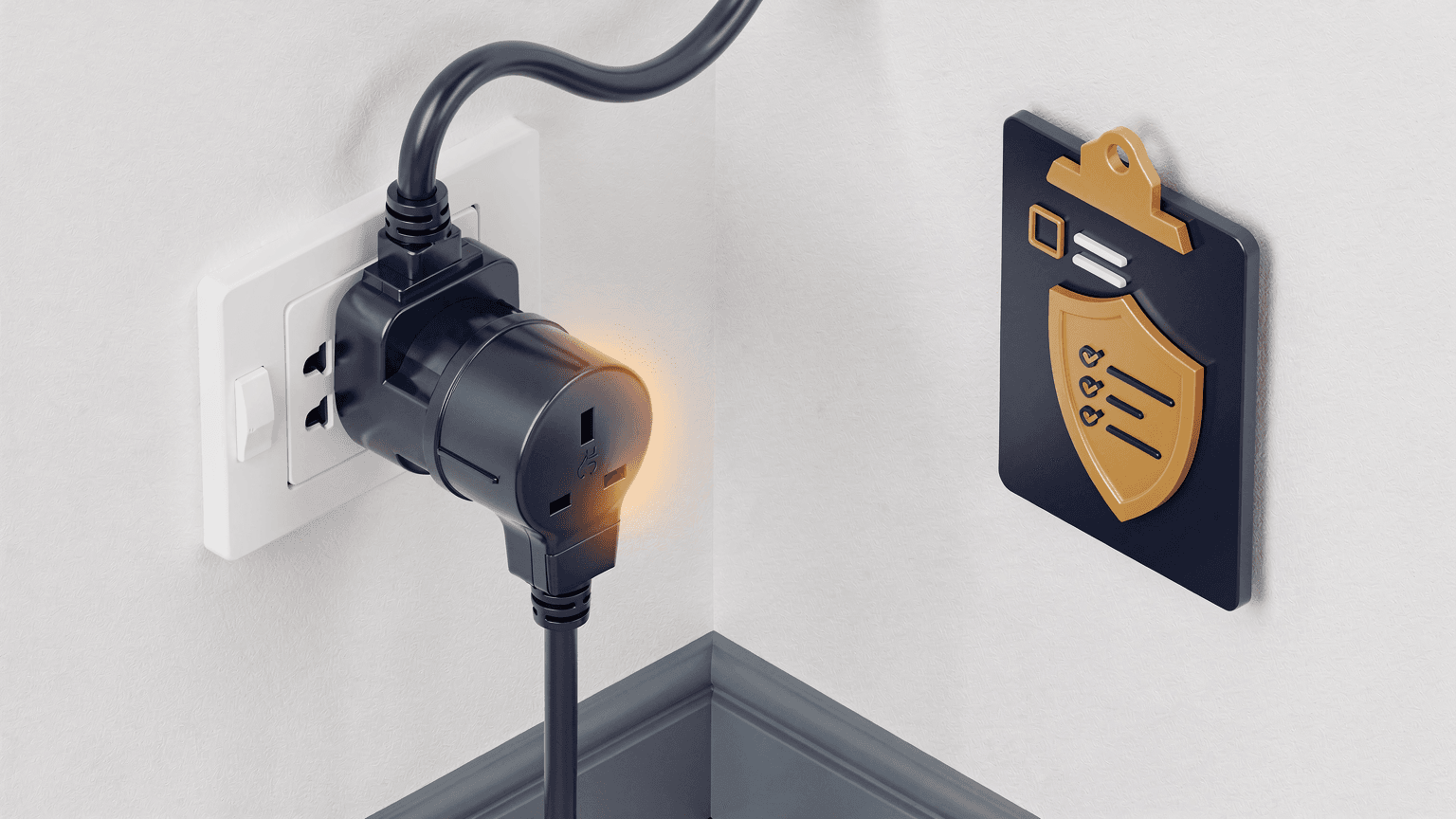
Plug-in solar panels have only been legal to connect to a standard UK socket since 27 August 2026, and insurers are already sounding the alarm. Risk assessment firm RiskSTOP, Zurich UK and The Property Institute have all warned in the past week that an undeclared plug-in solar kit could invalidate a home insurance policy — and the risk is sharpest for people in flats and leasehold blocks.
What changed on 27 August 2026
Plug-in solar — sometimes called balcony solar — became legal in Great Britain under Statutory Instrument 2026/848, which amended the Plugs and Sockets etc. (Safety) Regulations 1994 to create a new "plug-in microgenerator" category. For the first time, a compliant kit can be plugged into a standard BS 1363 13A socket by the homeowner, with no electrician sign-off and no formal grid agreement — only a notification to the local Distribution Network Operator (a G98 notification). The rules cap output at 800W AC per kit, with up to four panels and 2,000W of DC capacity feeding it. For the full legal picture, see our guide to plug-in and balcony solar in the UK.
Why insurers are worried
RiskSTOP's warning is blunt. Johnny Thomson, the firm's Head of Strategic Planning, said plug-in systems are "designed to be installed by householders and connected directly to a standard electrical socket" and that they "introduce many of the same electrical, fire and structural hazards associated with traditional PV systems, together with additional risks." RiskSTOP is telling insurers and brokers that understanding what has been installed, where, and how it is maintained "will become increasingly important."
Zurich UK's Head of Large and Complex Property Claims, Megan Dunford, put it more plainly: plugging in a solar kit means "you're adding a mini power station on your home," with real risk of electrical faults, overheating and fire if household wiring is old or unsuitable for the extra load.
That warning lands against a backdrop of rising solar fire incidents generally. QBE's analysis of UK fire service data found solar panel fires rose 133% between 2022 and 2025 — more than double the 52% growth in installations over the same period — with 212 incidents recorded in 2025, up from 91 in 2022. DC cabling and connector faults were the single biggest recorded cause, involved in 49 of those fires. Those figures cover the existing UK solar fleet (overwhelmingly rooftop systems), not plug-in kits specifically, but they're the reason insurers are treating any new self-installed electrical generation with caution. See our wider look at solar panel fire risk in the UK for the full data.
Do you have to tell your insurer?
Yes. Plug-in solar counts as a new electrical installation, and most insurers require you to disclose material changes like this. Go.Compare's Nathan Blackler has warned that if you don't tell your insurer and then suffer an electrical fire or fault, you could invalidate your policy entirely. Because a plug-in kit is portable rather than permanently fixed, it typically sits under contents cover rather than buildings insurance — so check your policy for outdoor-item exclusions, single-item limits and theft conditions for possessions kept outside, since a panel left on a balcony or in a garden is more exposed than one bolted to a roof.
Before you buy, insurers are also asking you to check the kit itself is compliant. Only panels and inverters certified against the government's Interim Product Specification and approved by your Distribution Network Operator meet the new rules — an uncertified kit bought online from overseas is both illegal to connect and very likely to be refused a claim if something goes wrong. Our guide to solar panels and home insurance covers the wider disclosure rules that also apply to rooftop systems.
Flats and leasehold properties face extra risk
The Property Institute has specifically flagged flats and leasehold blocks as the highest-risk setting. A plug-in kit on a balcony can share electrical infrastructure with communal parts of the building, and a poorly connected system — or one mounted on a combustible balcony surface — can push fault risk beyond a single flat. The Institute is advising managing agents to set up a formal consent process before residents install kits, and advising brokers to check lease terms and confirm block policies account for plug-in solar ahead of each policy's first renewal after 27 August 2026. Freeholders and managing agents may currently have no way of knowing a kit has gone up at all, which is precisely the gap insurers are trying to close.
What to check before you plug one in
- Confirm compliance. Buy only kits certified to the government's Interim Product Specification and cleared by your DNO — check before you buy, not after.
- Tell your insurer first. Contact your provider before installation, not after a problem, and get written confirmation it's covered.
- Check leasehold consent. If you're in a flat, ask your managing agent or freeholder whether their consent process applies to plug-in solar before fitting anything to a balcony.
- Keep records. Save receipts, the DNO notification, serial numbers and photos of the installed kit in case you need to make a claim.
- Inspect it regularly. RiskSTOP recommends periodic visual checks for damaged cables, loose fixings, corrosion or signs of overheating.
Plug-in solar is a genuinely useful option for renters and flat owners who couldn't previously generate their own power — but the insurance industry's message this week is clear: treat it as a real electrical installation, not a gadget, and tell your insurer before you switch it on.
FAQs
Do I need to tell my home insurer about a plug-in solar panel?
Will plug-in solar panels affect my flat or leasehold insurance?
Are plug-in solar panels covered by home insurance automatically?
Sources — verified 23 September 2026
- legislation.gov.uk, “The Plugs and Sockets etc. (Safety) Regulations 1994 and Electricity Safety, Quality and Continuity Regulations 2002 (Amendment) Regulations 2026 (SI 2026/848)” — www.legislation.gov.uk
- Claims Media, “Risk assessment experts issue warning about the insurance risks from new plug-in solar panel technology” — claimsmag.co.uk
- Insurance Business UK, “New plug-in solar rules bring fresh fire risk to leasehold cover” — www.insurancebusinessmag.com
- QBE European Operations, “Solar panel fires increasing at more than double the rate of installations” — qbeeurope.com
- Homebuilding & Renovating, “Will your home insurance cover plug-in solar panels?” — www.homebuilding.co.uk

About the author
Sepehr
Solar specialist & co-founder, Smart Solar Homes
Solar specialist and co-founder of Smart Solar Homes, which works with MCS-certified UK installer partners. I write all the guides and reviews here; the aim is straight-talking education the industry rarely provides.
Citing this page? Please use a dofollow link back to the original article — it helps us keep the data on this page accurate and up to date.
Browse Plug-In Solar Kits on Smart Solar Homes
Want to compare these side by side? Use the compare tool →
Or browse all Plug-In Solar Kits on Smart Solar Homes.
Related reading
More on plug-in solar kits from the editorial team.

Find installers near you
MCS-certified solar installers covering these areas.