Octopus Cosy Cooler: Heat Pump Cooling for £500-£600
Written and reviewed by Sepehr. See our editorial policy.
Octopus Energy has unveiled the Cosy Cooler, a plug-in indoor unit that turns a Cosy heat pump into a room-cooling system. Announced in London on 14 October 2026, it is priced at £500–£600 and due in 2027. For solar owners it matters because summer cooling demand peaks on exactly the sunny afternoons when panels are producing the most (Octopus Energy).
What the Octopus Cosy Cooler is
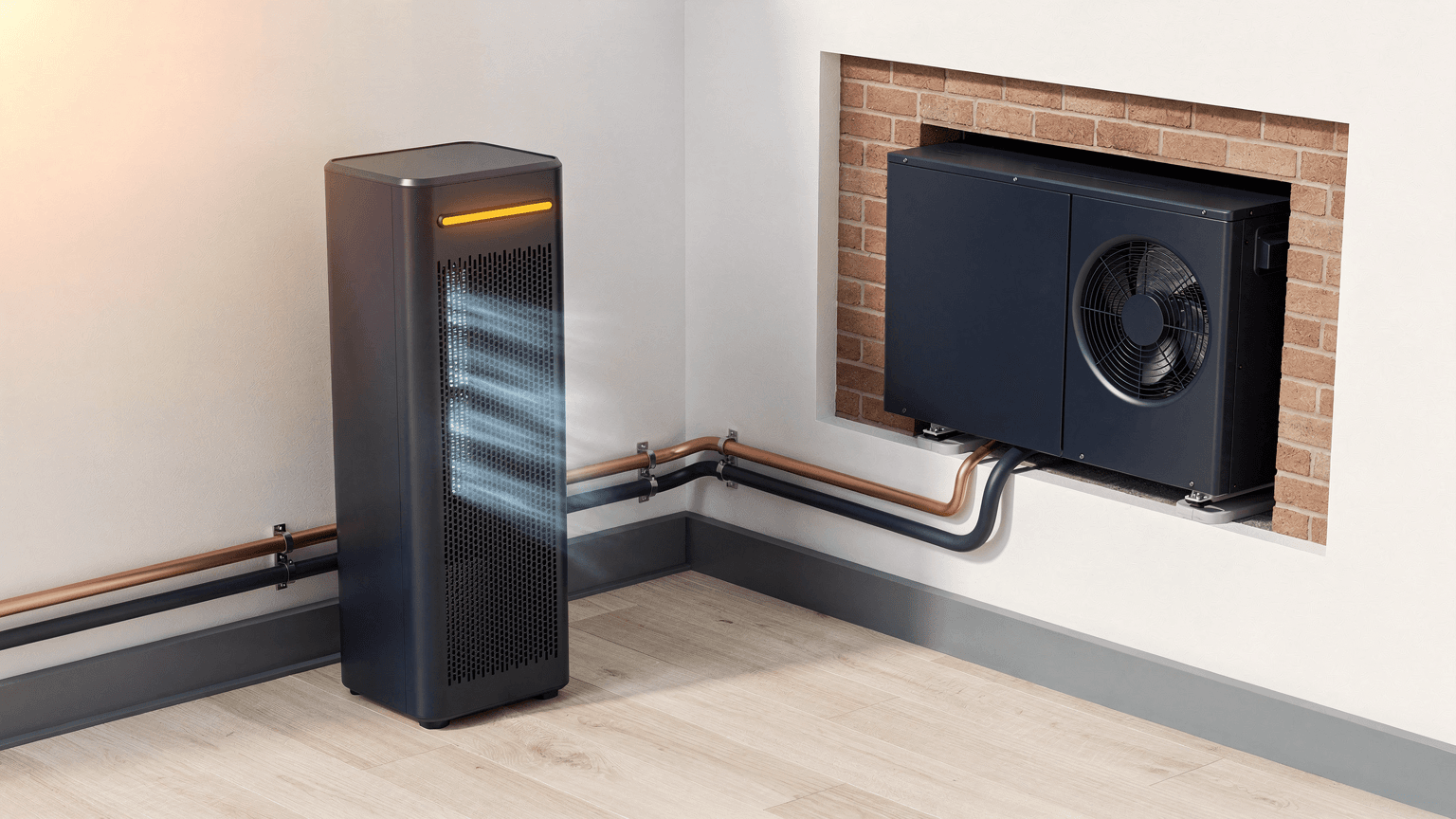
A water-to-air cooling unit. Octopus describes it as about the size of a tall kitchen bin: roughly 72cm high, 43cm wide and 36cm deep, weighing about 28kg. It plugs into a home's existing radiator pipework and circulates chilled water, so there is no outdoor hose and no separate split air-conditioning system (Octopus Energy).
How the heat gets out. The unit draws warm air from the room, removes the heat through a heat exchanger and returns cooler air. The heat travels through the heating pipework to the outdoor Cosy heat pump, which releases it outside. Octopus says the water is kept at a temperature that avoids condensation, so radiators should not drip (Octopus Energy).
One room or several. A single unit cools one room. Depending on the Cosy heat pump model, two or three units can run at once in different rooms (pv magazine).
Cosy Cooler price and timing
£500–£600 on top of an existing Cosy heat pump. Octopus compares that with £2,000–£6,000 for installing traditional air conditioning. That comparison is the company's own claim, and it only holds for homes that already have, or are buying, a compatible Cosy heat pump. Installation is expected to take about three hours (Octopus Energy).
2027, with trials under way. Octopus says the Cosy Cooler will be available in 2027 and that live home and office trials have started. It has not announced a firm launch date, and no running-cost, rated cooling capacity, noise or efficiency figures have been published yet (pv magazine). Treat the price as a target until the product ships.
Why Octopus is pitching cooling now
The release points to temperatures reaching 38.2°C in August 2026 and concern about keeping homes cool next summer as El Niño develops. Greg Jackson, Octopus Energy's founder and chief executive, said British homes need to be ready for “freezing winters and increasingly hot summers”. Octopus also says 99% of its Cosy customers pay less to run their heat pump than they would a gas boiler, saving an average of £230 a year, and that it has received 570,000 heat pump enquiries over 18 months. These are company figures rather than independent data (Octopus Energy).
What it means for solar owners
Octopus's release does not mention solar, so what follows is our reading rather than anything the company has claimed.
Cooling load and solar output line up. Hot, bright afternoons are when a typical array is generating strongly, so any electricity a heat pump uses to cool a room can in principle come from your own panels rather than the grid. That only works if the heat pump is running while the sun is out, and the efficiency of cooling mode has not yet been published. Our guide to heat pump running costs explains how to judge what a heat pump costs to run, and are heat pumps worth it covers the wider case.
A battery and a smart tariff help at the margins. If cooling runs into the evening, a home battery can shift stored solar into those hours, and a time-of-use tariff can cheapen whatever the grid has to supply. See time-of-use tariffs for solar owners for how those work with solar.
It is not a reason to buy a heat pump on its own. The government's Boiler Upgrade Scheme grant is aimed at replacing fossil-fuel heating, and Octopus says heat pumps now cost the same or less to install than a gas boiler after the grant. If you are weighing that up, start with our Boiler Upgrade Scheme update, then heat pump vs gas boiler. The cooler is a bonus for Cosy owners, not a substitute for a proper heating decision.
What we do not know yet
The numbers that decide whether it is worth £500–£600. Octopus has not published cooling capacity in kW, the unit's electrical consumption, airflow, noise or seasonal efficiency. Without those, there is no way to say how large a room it can cool or what a hot week would cost to run. It is also unclear whether the unit will work with heat pumps other than Cosy, since Octopus describes it as an add-on for Cosy models. We will update this page when specifications or a launch date are confirmed.
FAQs
How much does the Octopus Cosy Cooler cost?
Can a heat pump provide cooling in the UK?
Will the Octopus Cosy Cooler run on solar power?
Sources — verified 19 October 2026
- Octopus Energy, “Octopus' new low cost add-on will turn heat pumps into air-cons” — octopus.energy
- pv magazine, “Octopus Energy unveils heat pump add-on for home cooling” — www.pv-magazine.com

About the author
Sepehr
Solar specialist & co-founder, Smart Solar Homes
Solar specialist and co-founder of Smart Solar Homes, which works with MCS-certified UK installer partners. I write all the guides and reviews here; the aim is straight-talking education the industry rarely provides.
Citing this page? Please use a dofollow link back to the original article — it helps us keep the data on this page accurate and up to date.
Browse Heat Pumps on Smart Solar Homes


Want to compare these side by side? Use the compare tool →
Or browse all Heat Pumps on Smart Solar Homes.
Related reading
More on heat pumps from the editorial team.


Find installers near you
MCS-certified solar installers covering these areas.